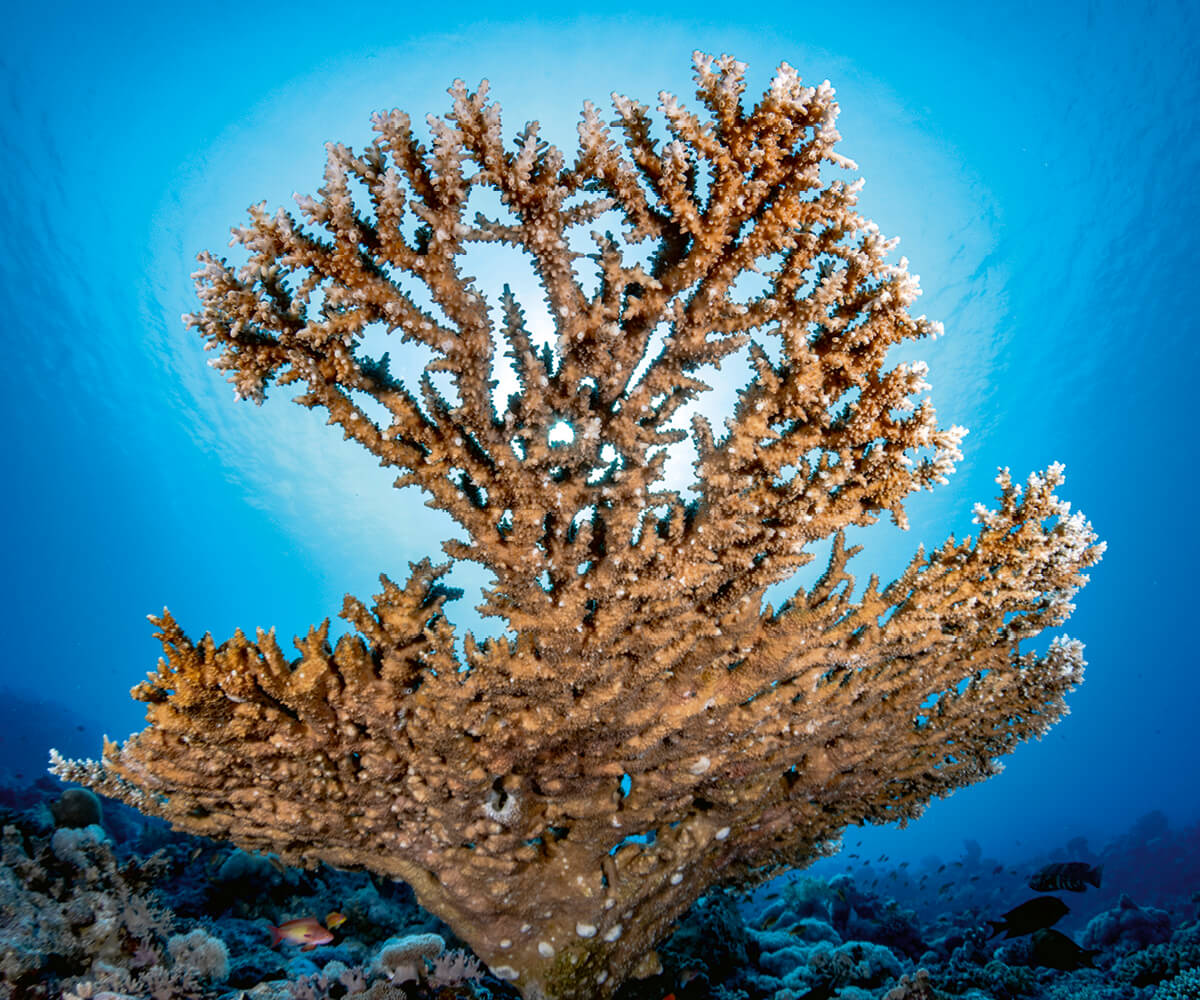
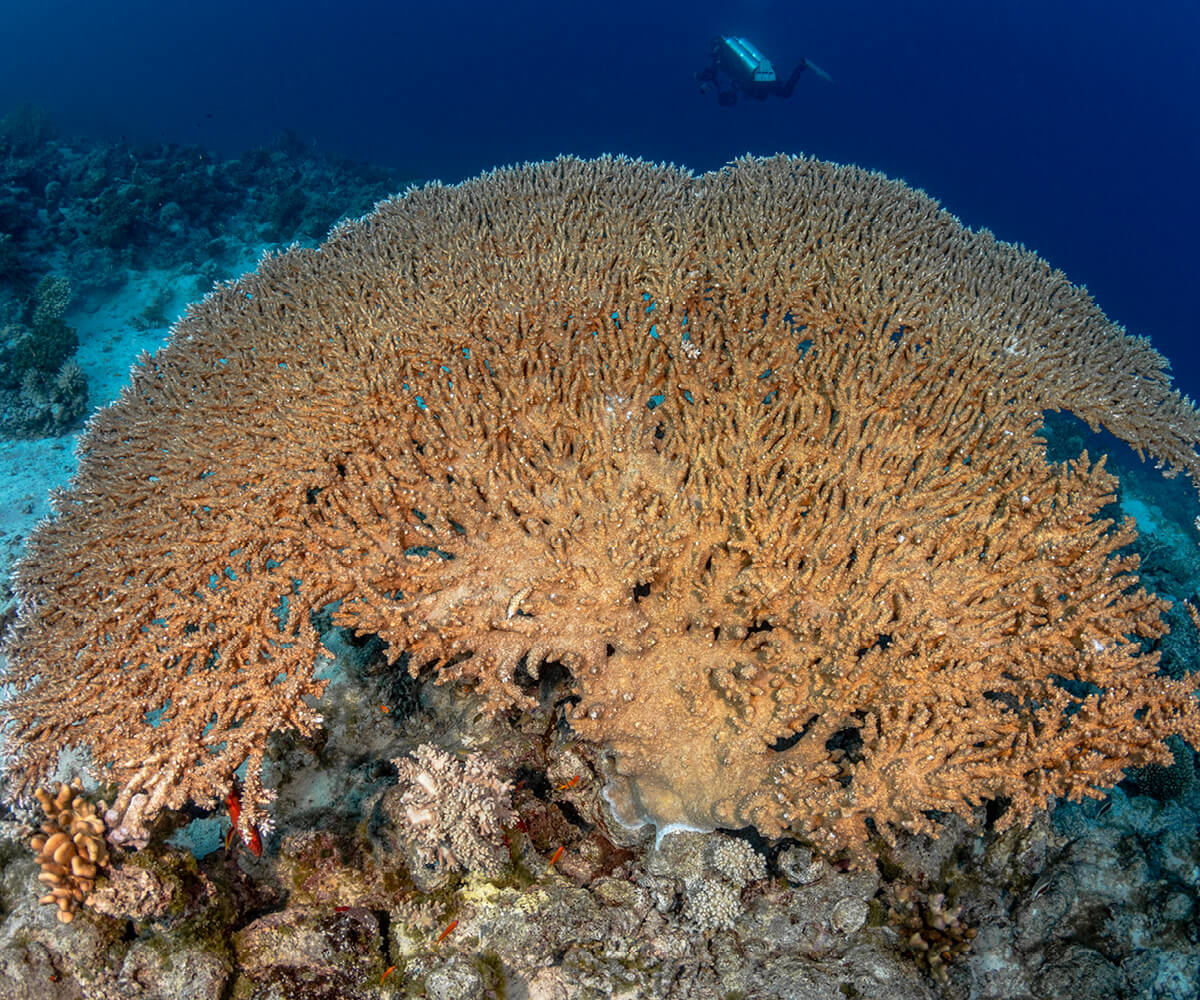
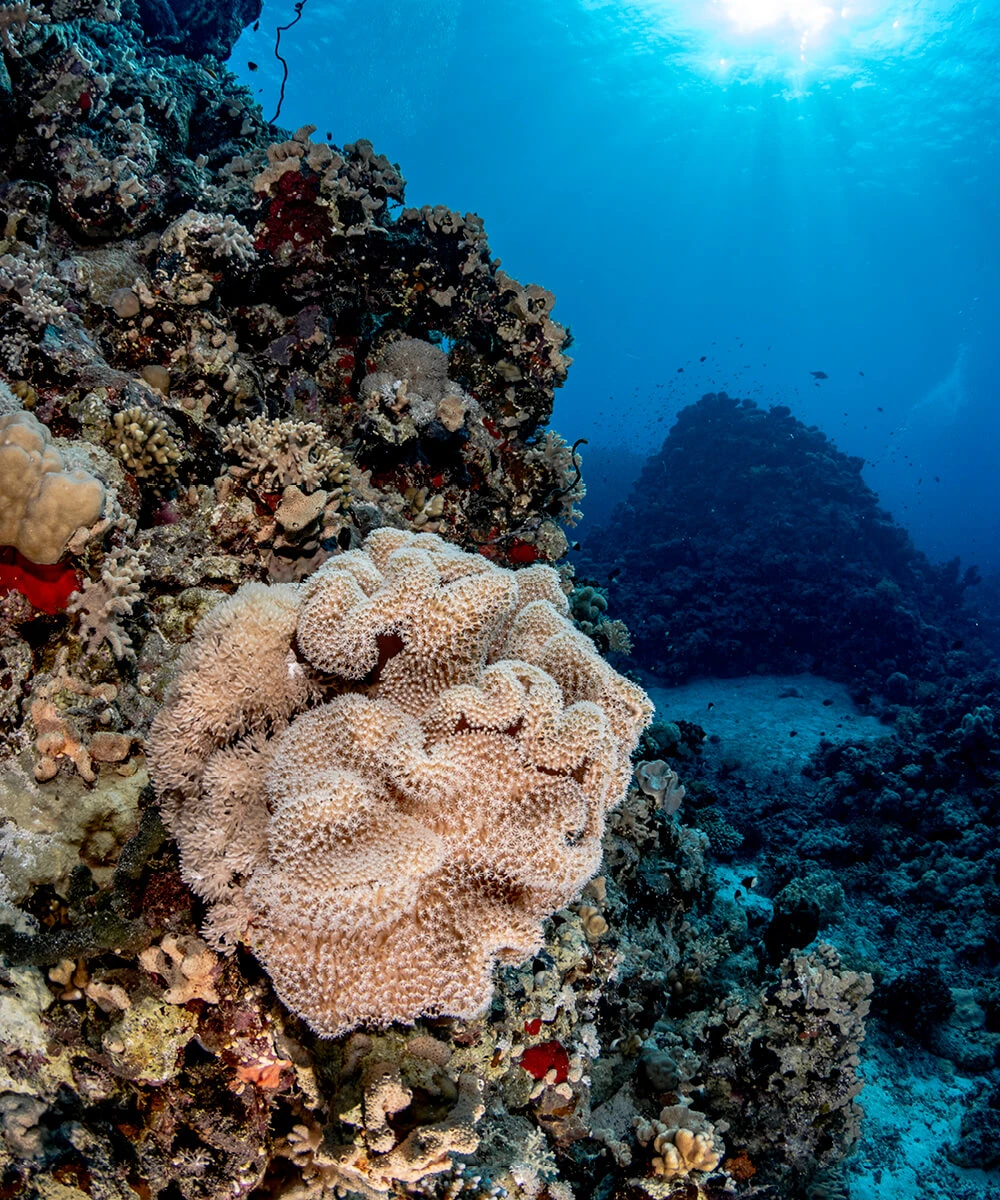
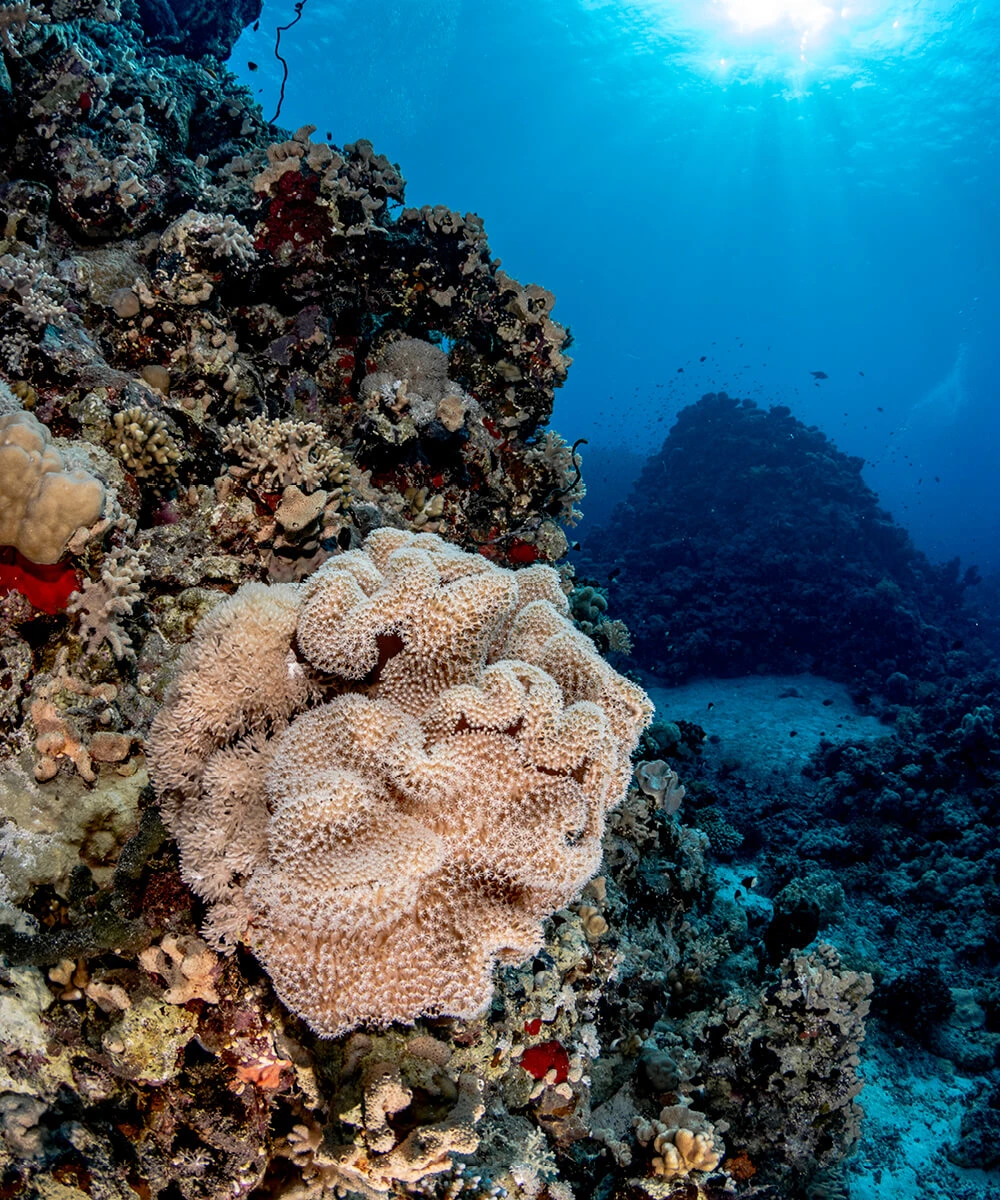
Described as one of the Red Sea’s most iconic dive sites, the reef at Abu Glawa is home to exquisite coral, plateaus, steep drop-offs and many species of shark, including hammerheads, whitetip reef sharks and tiger sharks.
Just off the coast of Yanbu in Al Madinah Province, this elongated reef has a shallow anchorage point and offers excellent shelter, making it a popular night spot for diving enthusiasts.
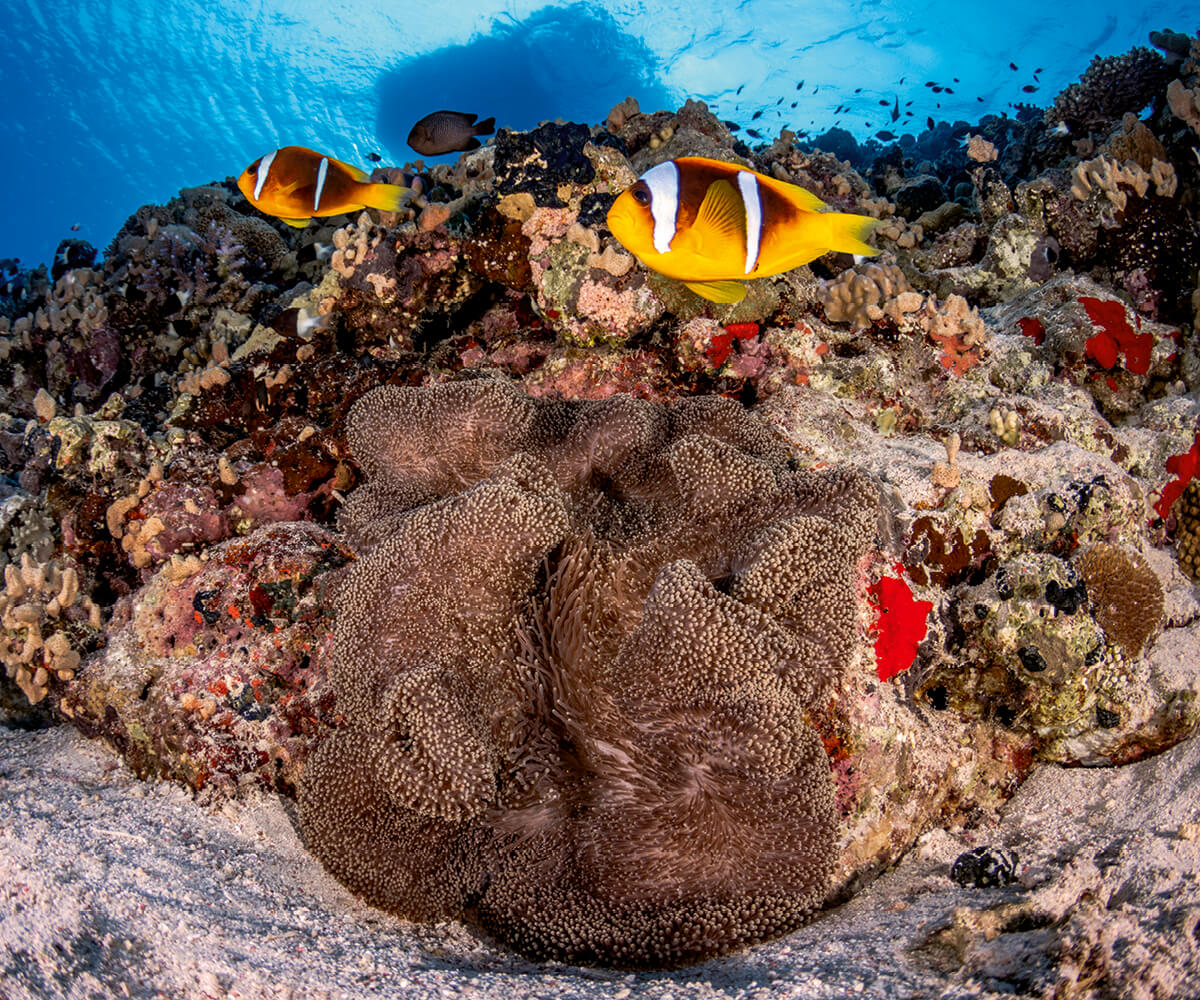
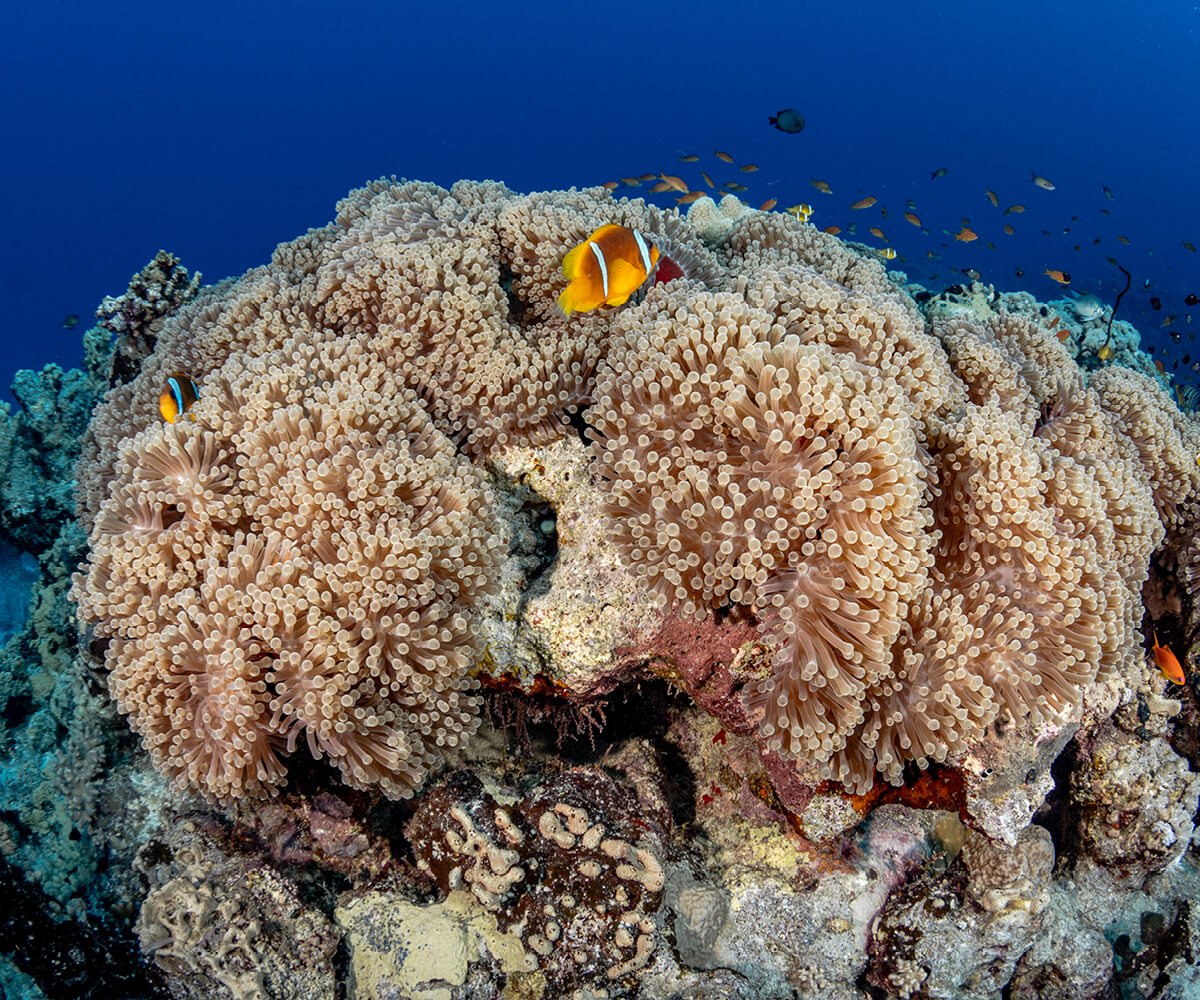
The two dives explore a wide plateau on the east side of the reef and a steep drop-off on the north. There is an abundance of clownfish, groupers and barracudas in the shallower waters and divers may also see turtles.
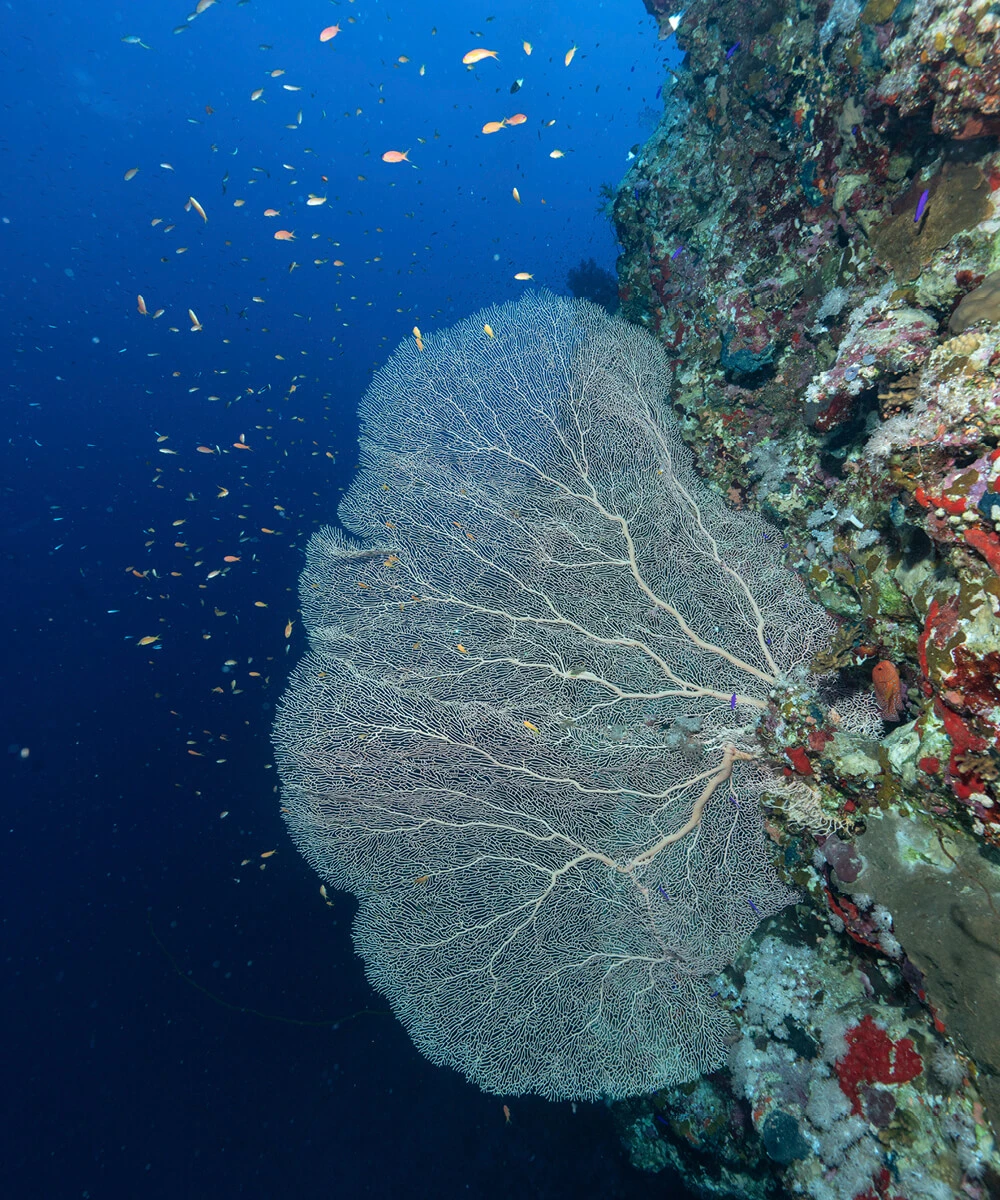
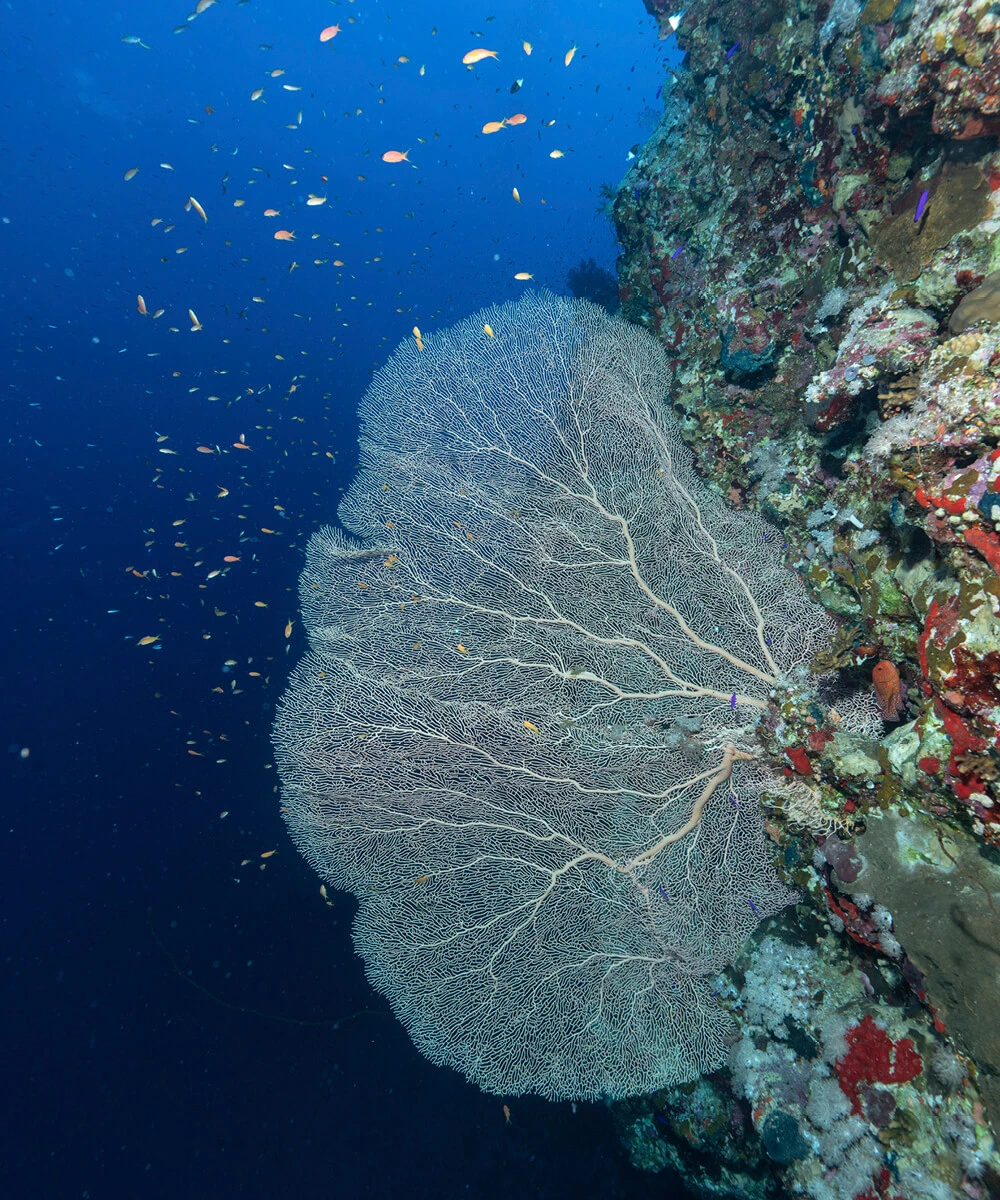
The routes of both dives descend to about 20m deep. Along the way, divers will encounter gorgonias which are known to host tiny pygmy seahorses, which, with their knobbly bodies, blend perfectly into the branches and are almost impossible to spot!
The routes also encompass shallow depths, and there are mild-to-strong currents around this reef, which can make swimming along the reef challenging in places. Suited for beginner, advanced and technical divers, it’s worth venturing across the drop-off to see some of the Red Sea’s largest sharks – the main highlight of this dive. Like all recommended spots in this region, this dive is also perfect for freedivers looking for thrilling drops.
The visibility here is excellent, making it easy to spot the tiger shark’s distinctive vertical stripes.
Unlike hammerheads, which sometimes swim in shoals, tiger sharks are solitary animals, taking care of themselves from the moment they are born. But don't be fooled! They are known to congregate, but only due to food availability, not out of companionship.
The first route ends where it began, and the second ends further down the reef. Both sites give you ample time to explore Abu Glawa’s fascinating marine life and underwater coral gardens.
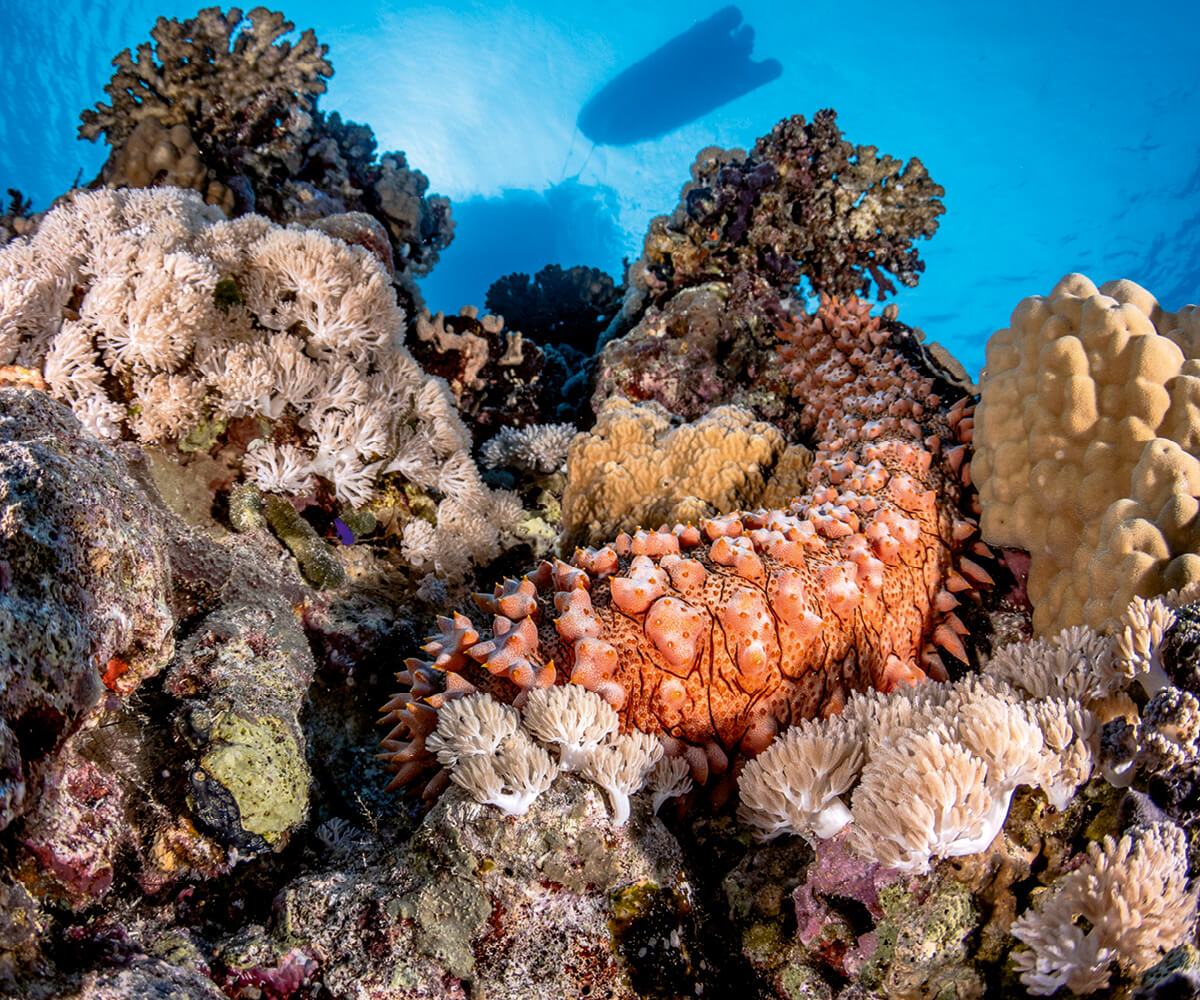
Sea cucumbers are a common sight across the sandy floors of the Red Sea. While some feature smooth cylindrical bodies, others, such as the tubercle cucumber, are distinguished by long, sharp papillae, which allow the sea cucumber to breathe and sense its surroundings.
See More...




 Top Dive Time