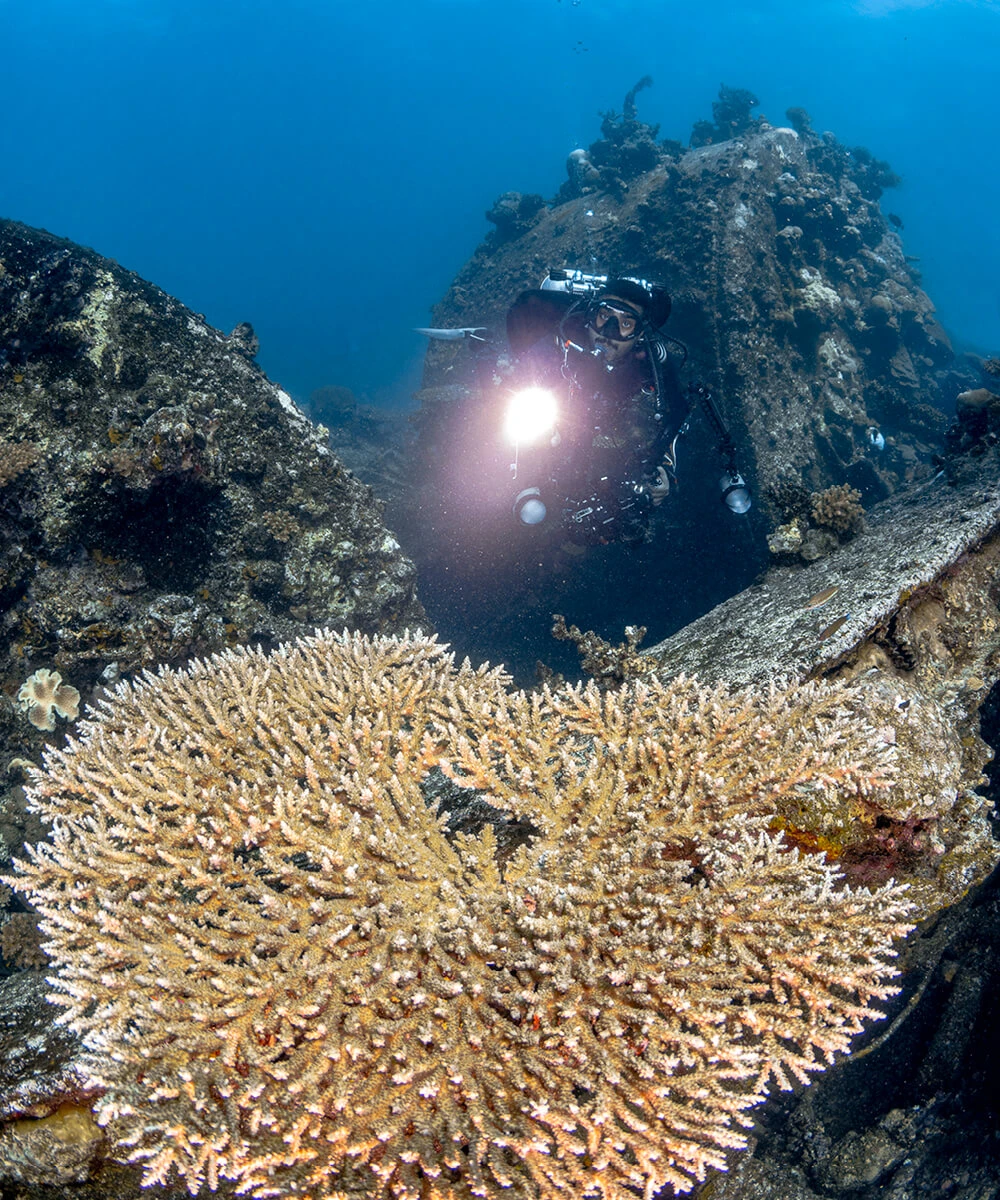
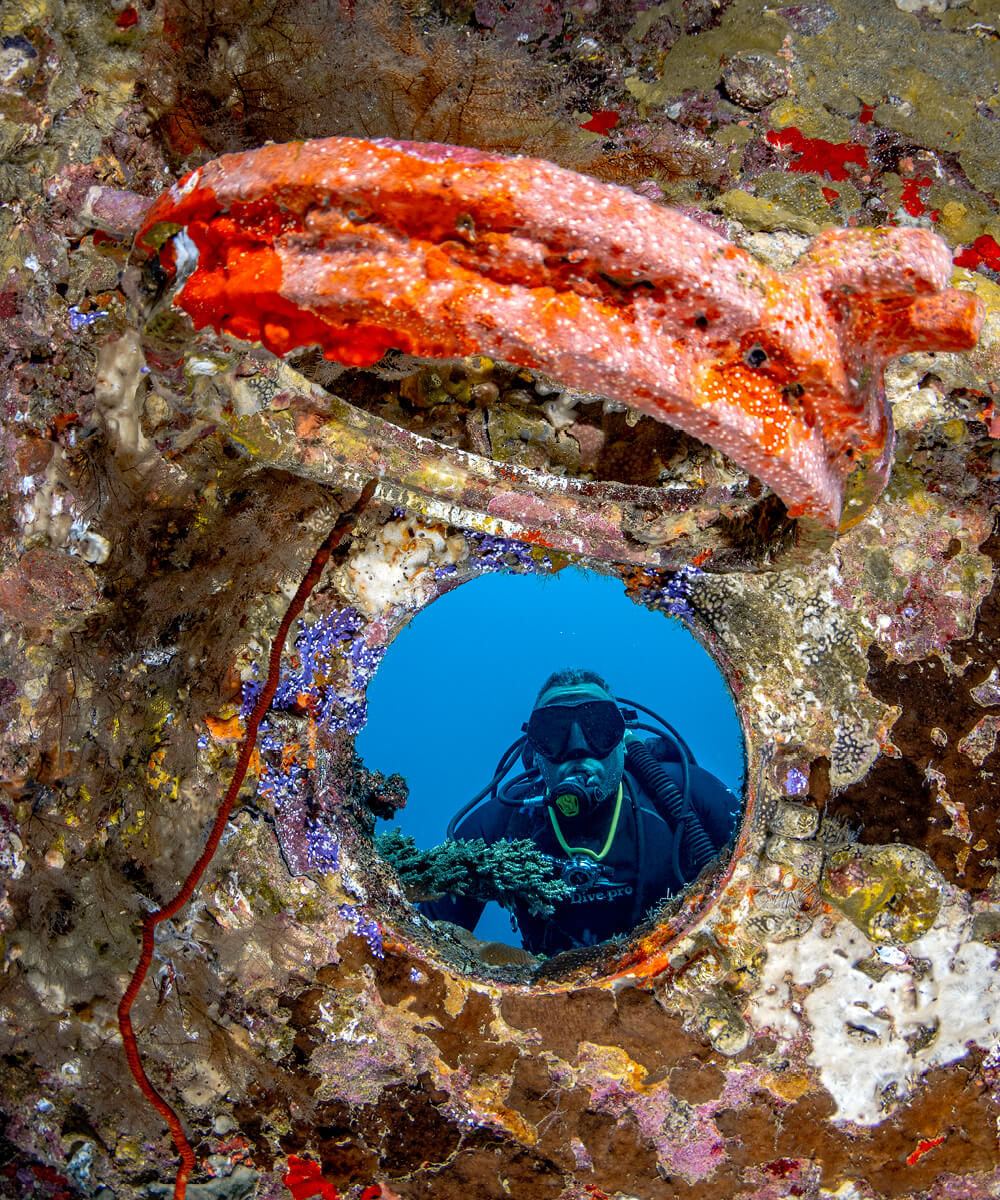
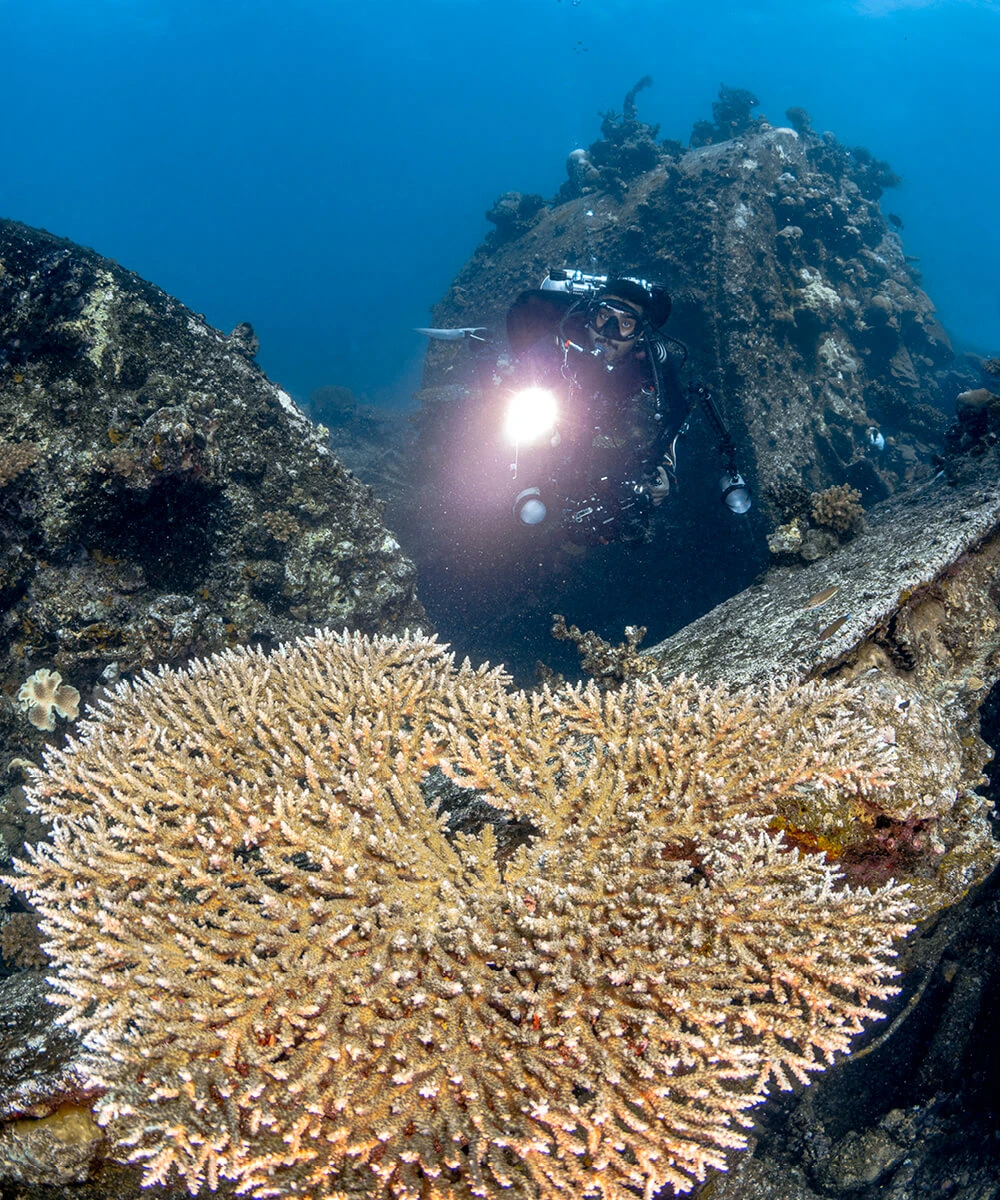
Built in 1907 for the purpose of cargo transport, the SS Despina was a Greek steamer carrying coal from Calcutta to Port Said when it met its fateful end in 1952. An explosion occurred somewhere in the ship, which started a fire and caused the ship to run aground in the Red Sea, about 20NM off the coast of Rabigh. Now sitting along the Sha’ab Almutarbeg reef, the SS Despina is more than just a shipwreck; it’s a must-see for divers with a penchant for both history and marine exploration. That’s because the SS Despina has become a living, breathing ecosystem.
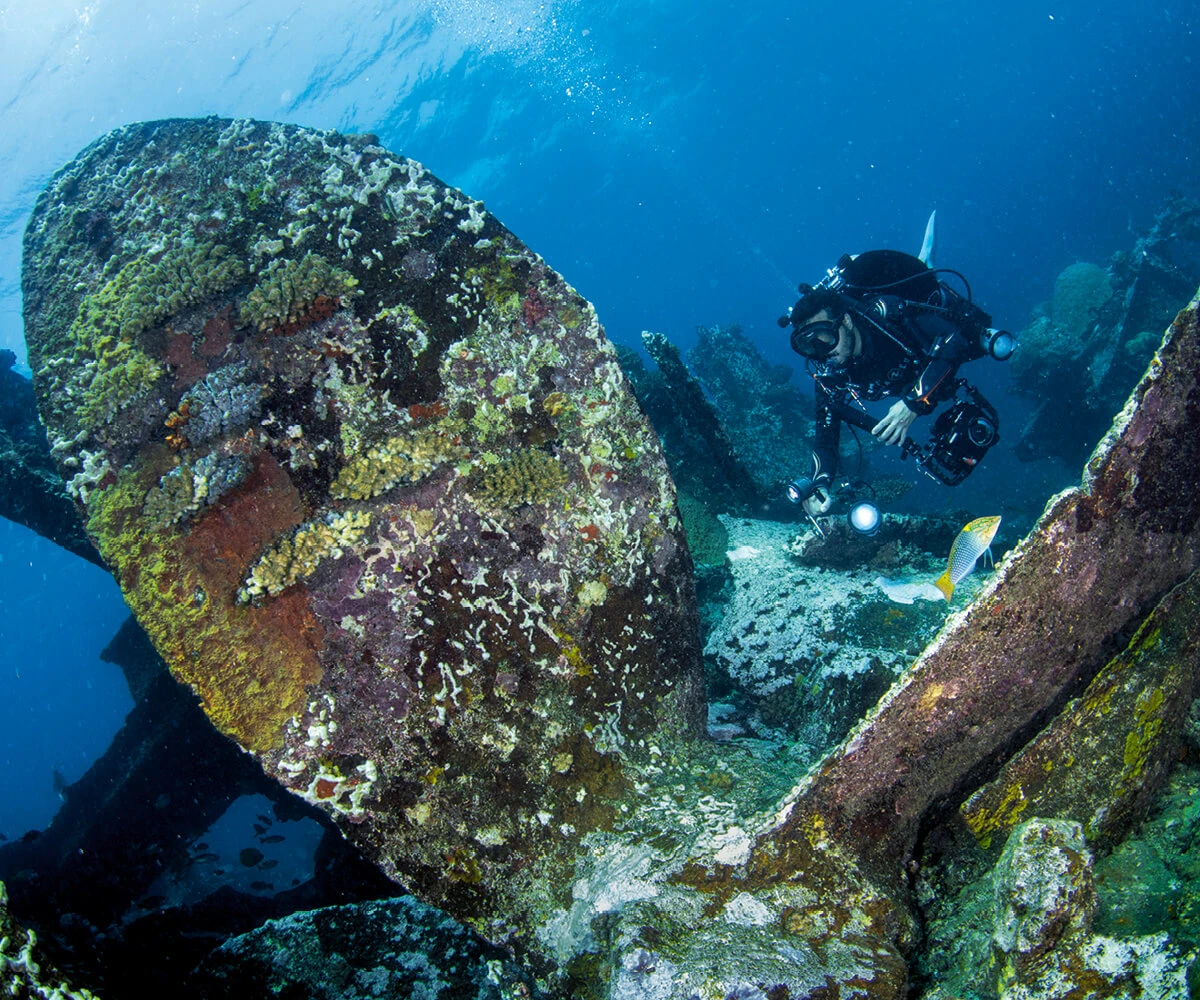
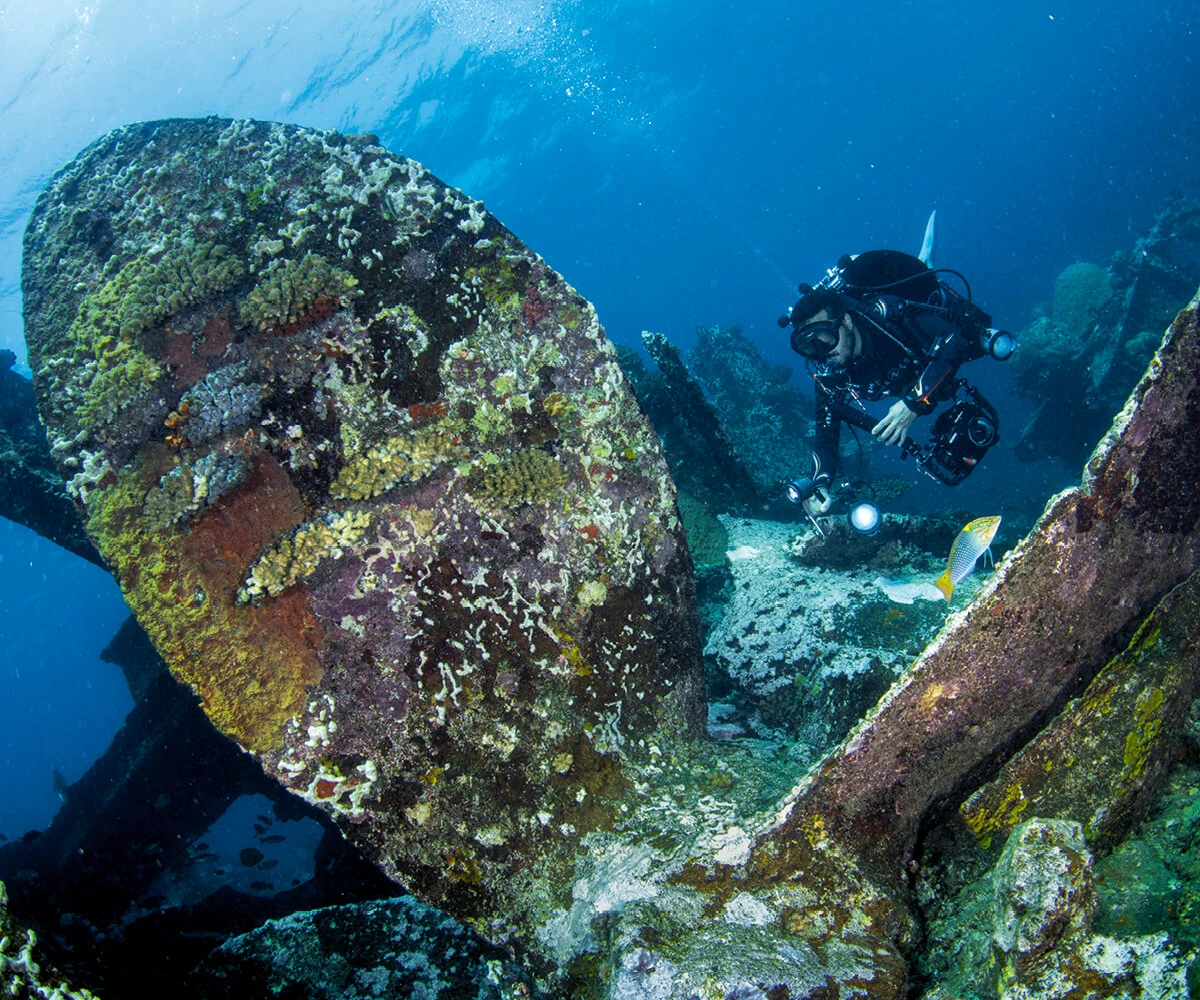
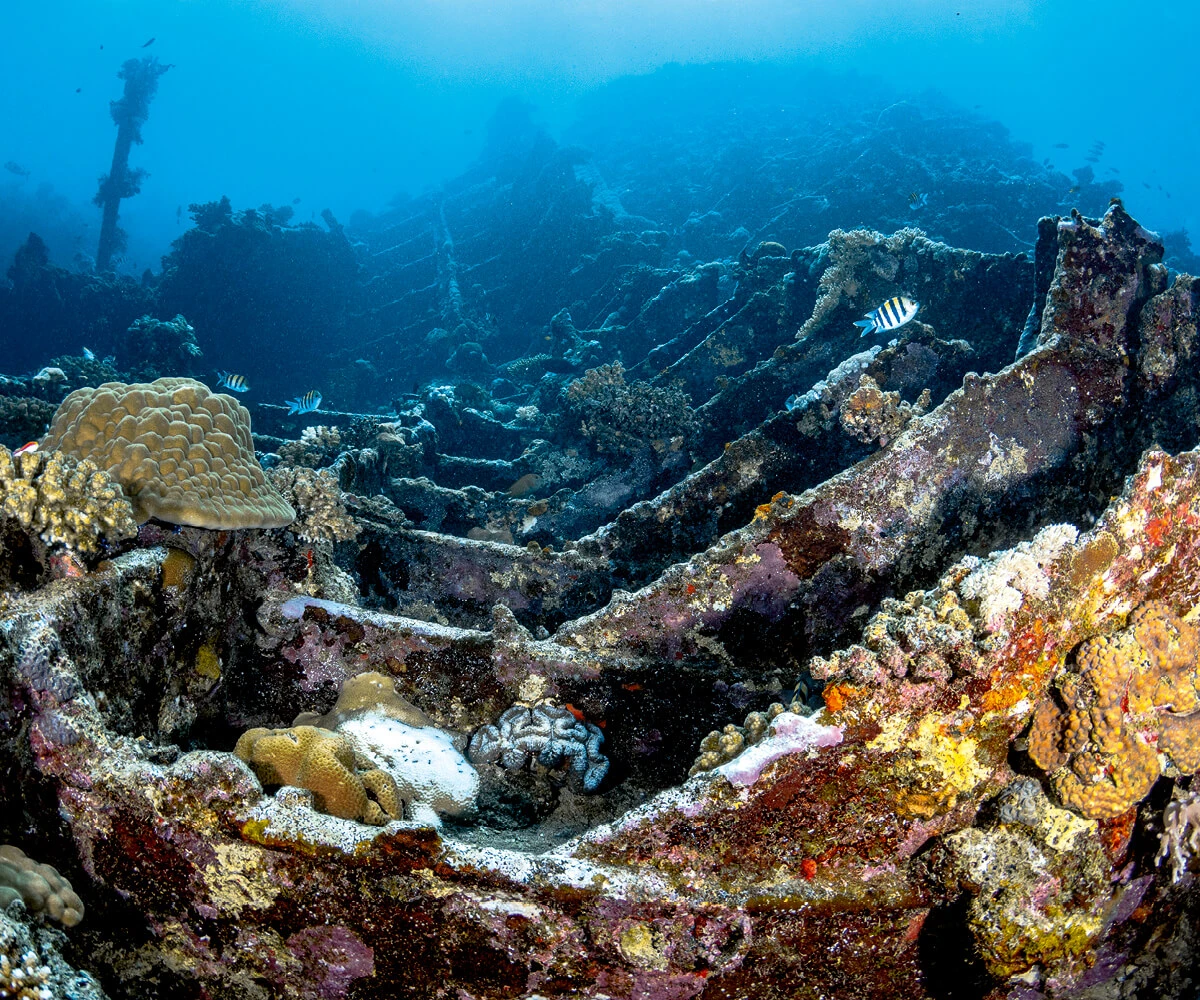
Having spent more than half a century steeped in water, the ship has been absorbed by its surrounding environment and has become an artificial reef, providing shelter and sanctuary to a variety of marine life. Swimming alongside them, divers will find red snappers, sweetlips, grouper fish and even stingrays. Most unique, however, is the sergeant major fish, which can be found in large shoals around the ship. Having made the SS Despina its home, the ship is full of this colourful creature’s eggs. Characterised by its distinctive colouration, with a dark blue-black body and yellow or white stripes running horizontally along its sides, these herbivorous fish are commonly found near coral reefs, and play a crucial role in maintaining coral ecosystems.
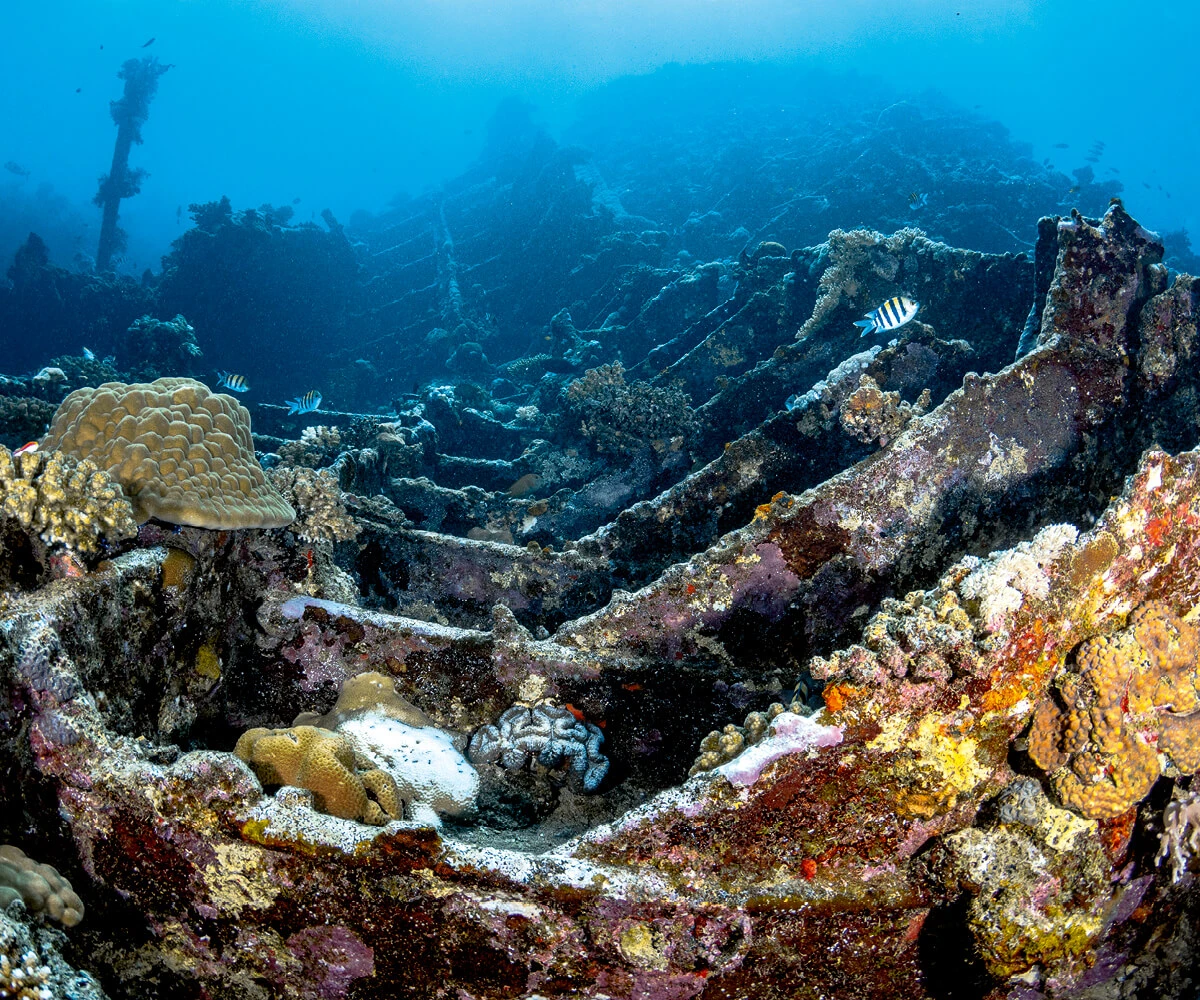
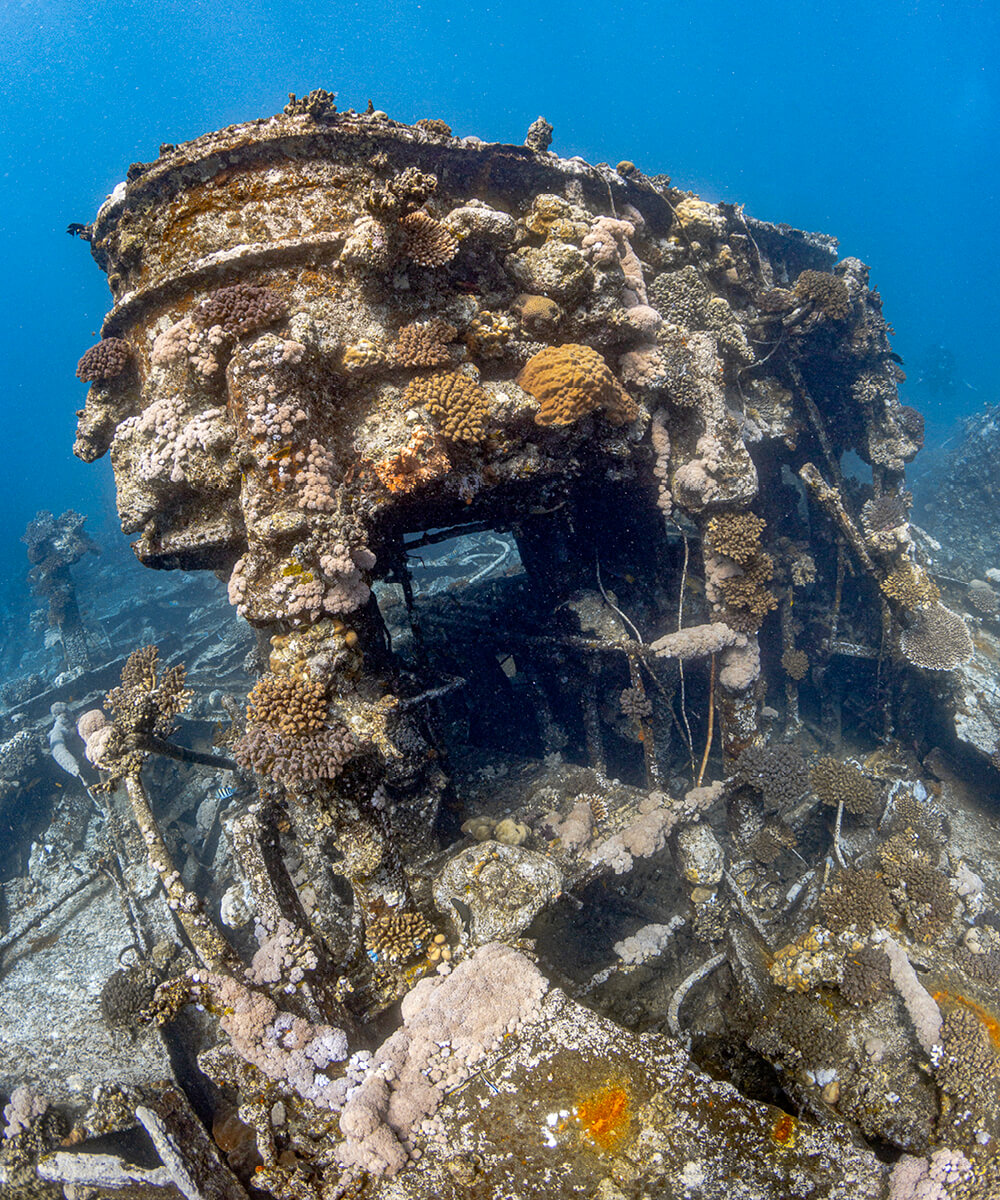
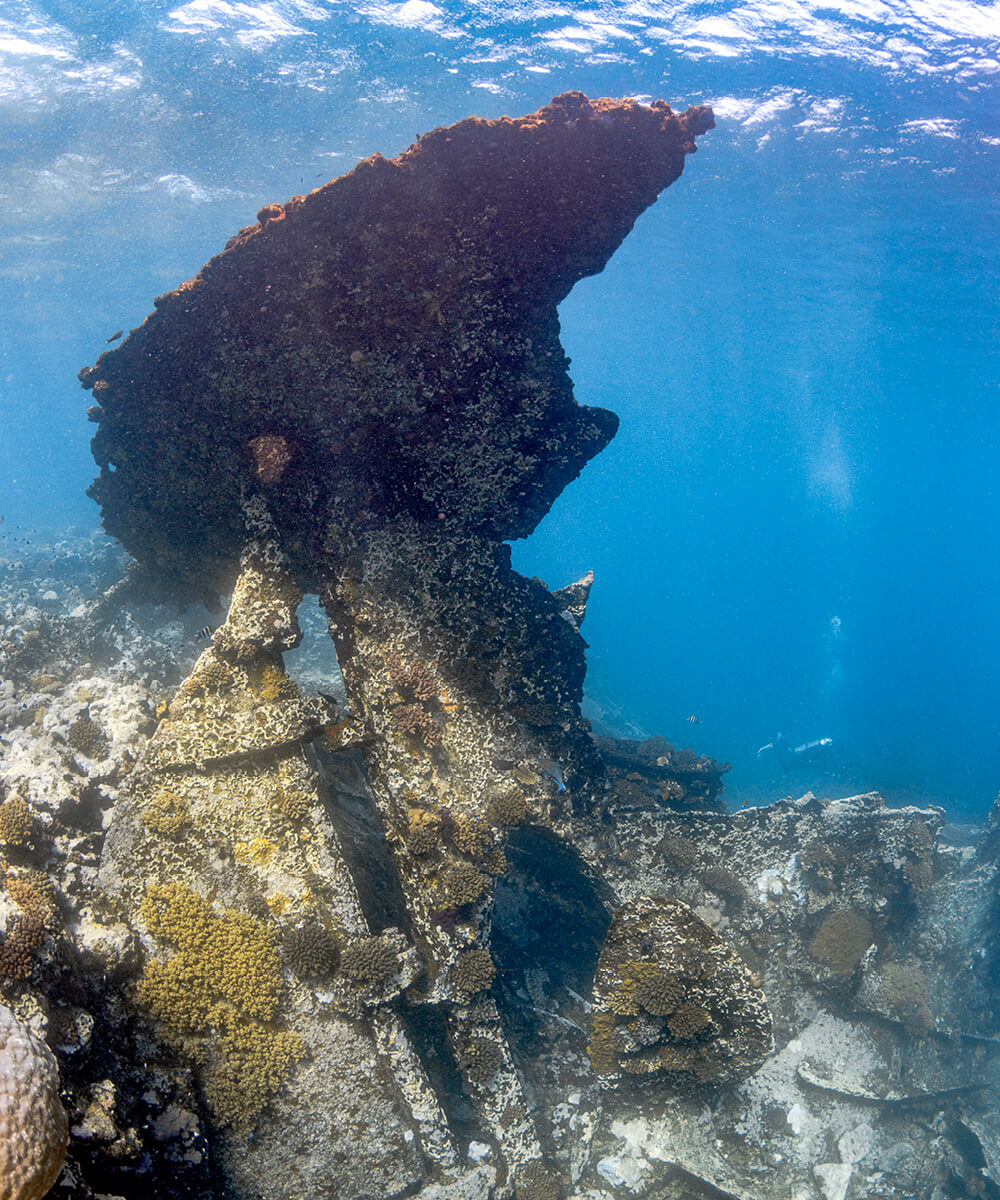
Gliding through the defunct ship which measures 100.6m by 14.4m by 6.6m makes for an eerie yet exhilarating experience. Starting at the ship’s radar, divers will come across its boilers at a depth of 11m as they head north, and the bow of the ship at a depth of 16m. Along the dive route, various parts of the ship will begin to emerge, including the hull, deck and superstructure, surprising divers with new discoveries at every twist and turn.
While the dive’s visibility of 13m is not the greatest of the Red Sea’s dive spots, it still has much to offer. Its 32°C temperatures, max depth of 18m and lack of current ensure that less-experienced swimmers will still be able to enjoy the wreck and its thriving marine life to the fullest.
Encrusted with colorful coral and frequented by curious fish, the Red Sea’s diverse ecosystems of the Red Sea have given this ancient shipwreck new life.
See More...






 Top Dive Time