This incredible dive site is on the horseshoe-shaped atoll known as Takshif Albraniah. Here, divers will uncover an underwater kingdom featuring a submerged island and sandy plateaus cascading down to the site’s phenomenal drop off. The area is prone to strong northerly currents and embracing depths of 35m, this is a dive best for advanced and technical divers.
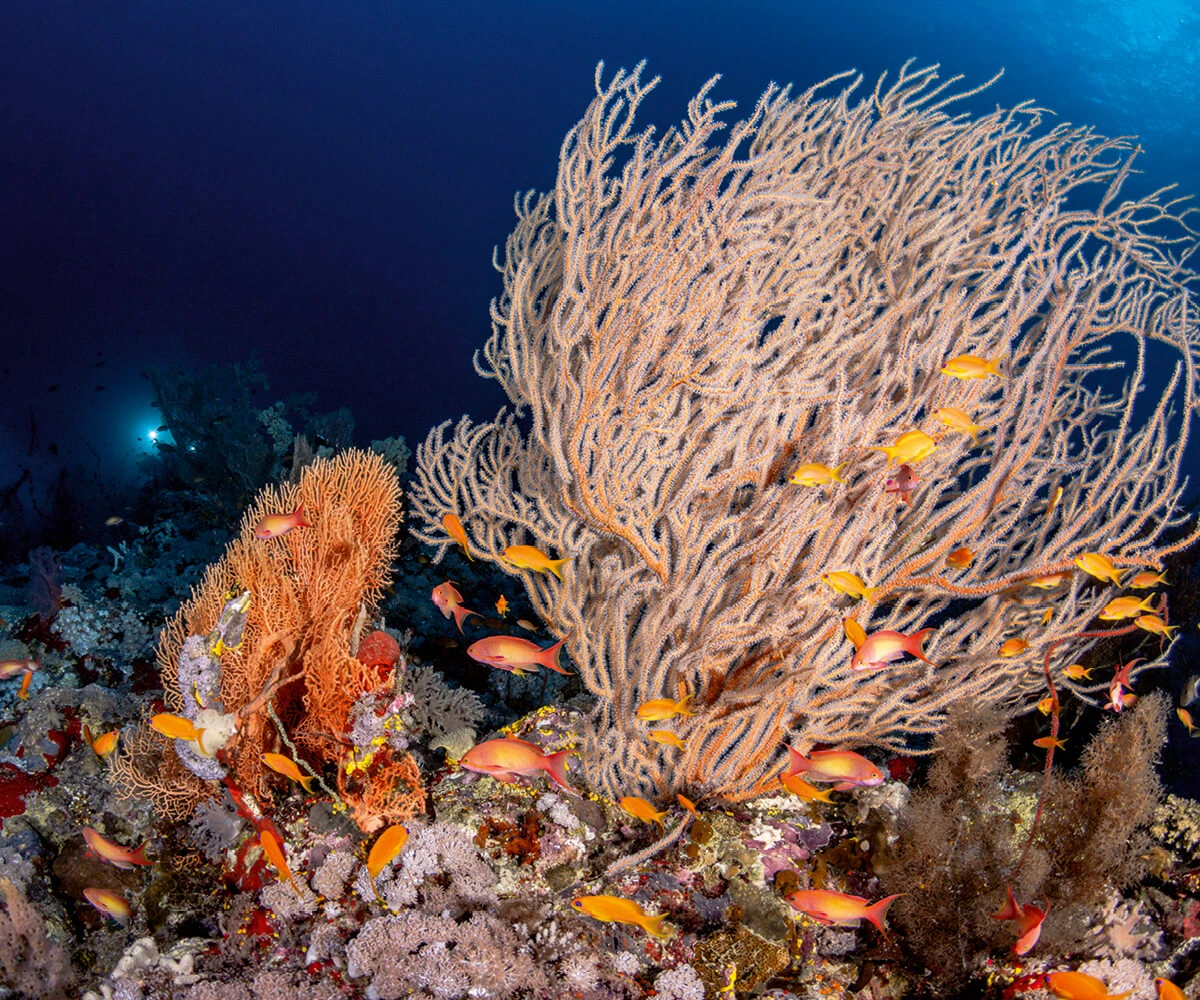
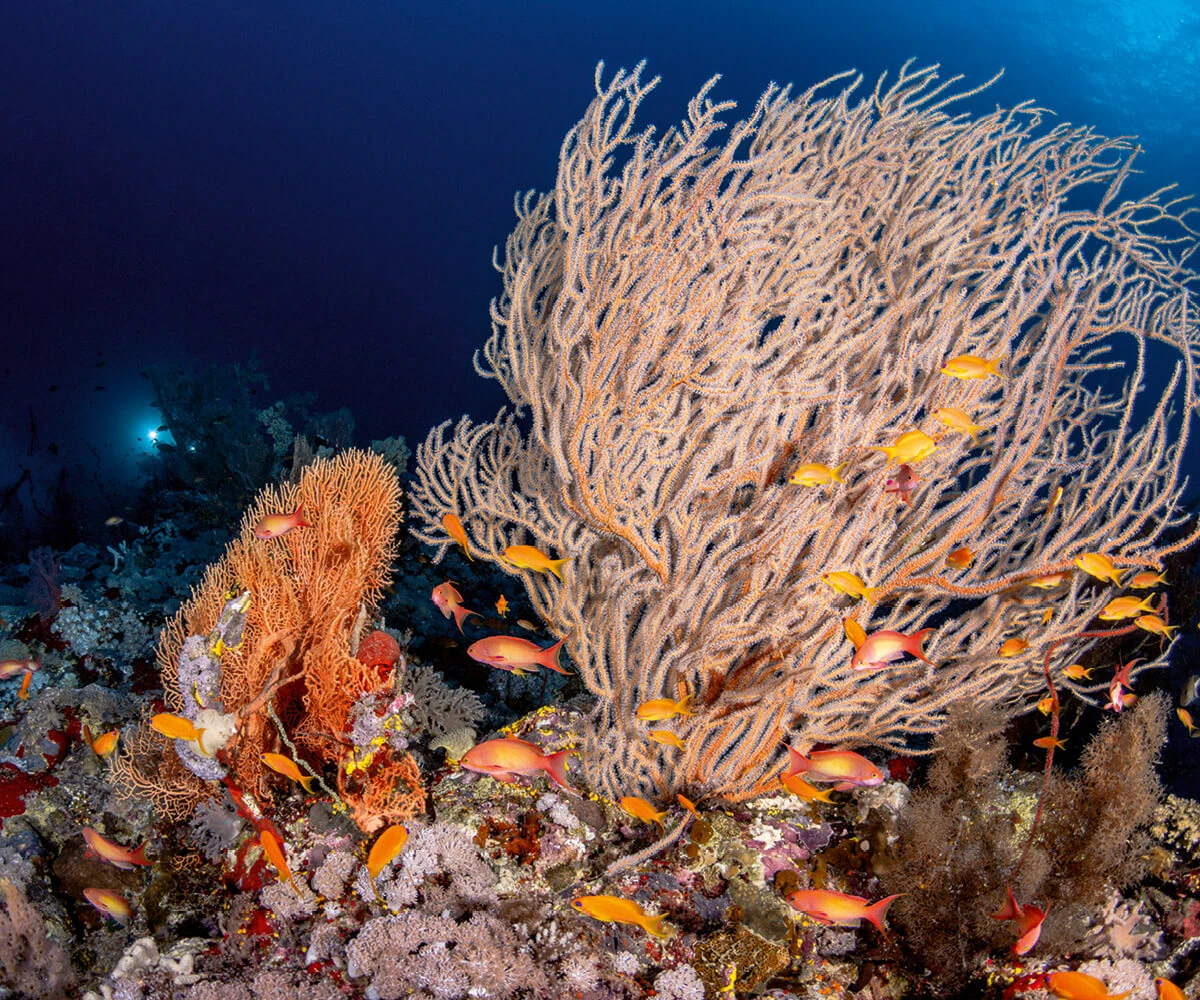
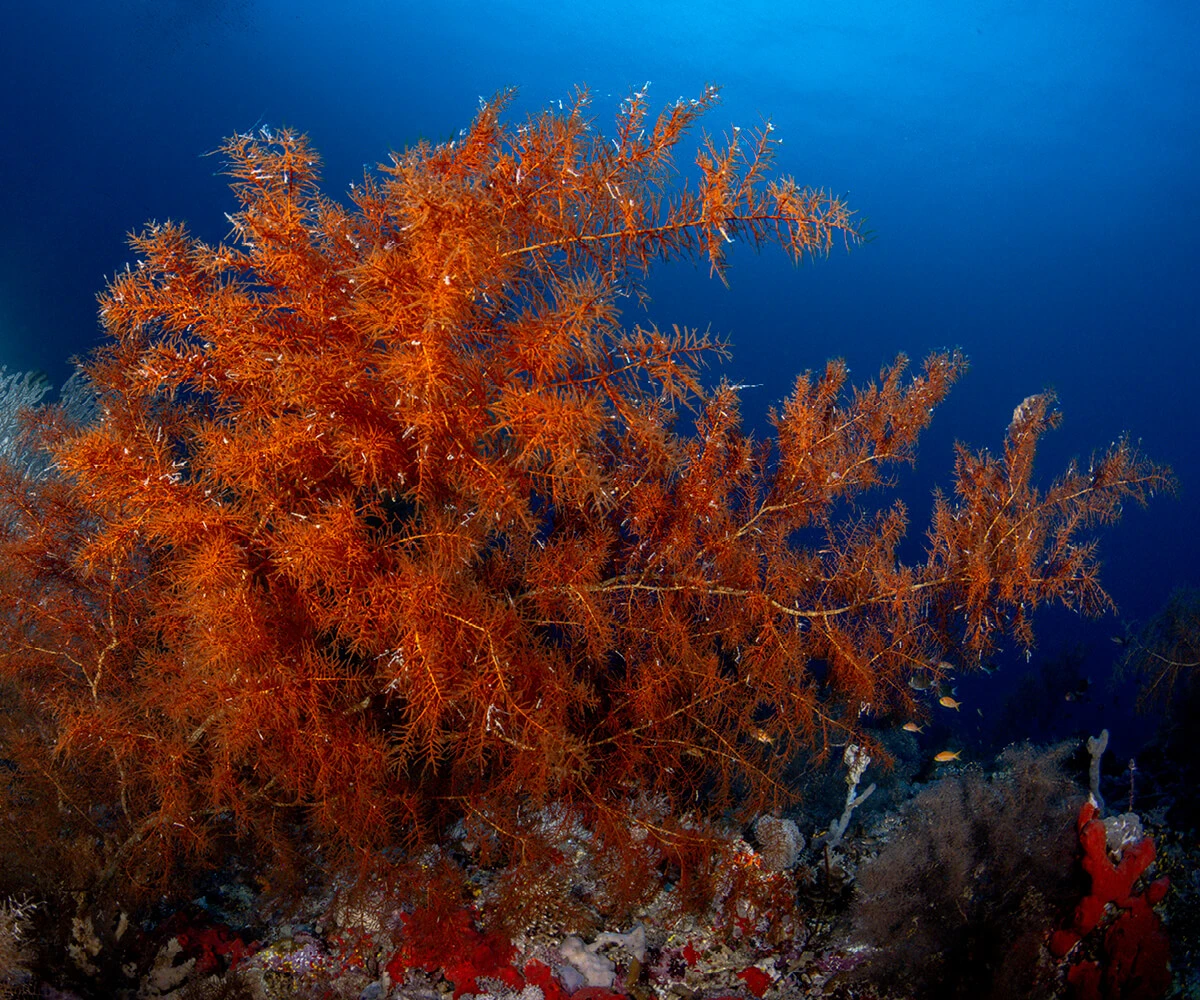
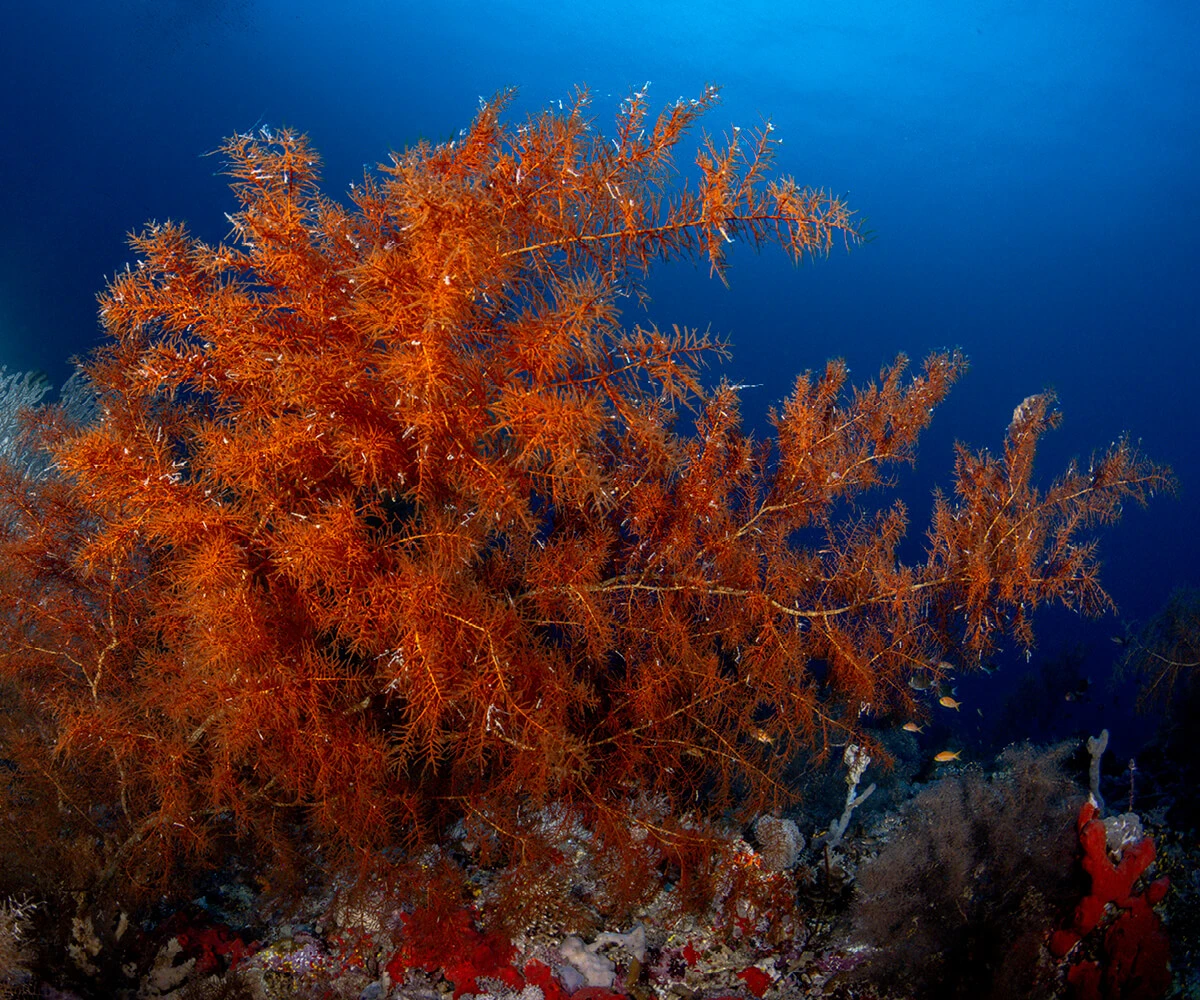
Located on the southwest side of the reef, the dive begins at an anchor point of 32m just before the drop off. From here divers can explore the lower plateau which, covered in a sugary white sand, is punctuated with troves of black coral and pretty gorgonias. The strong current makes these delicate-looking sea fans seem even more fragile and it’s a wonder they survive unscathed. The next plateau is only 5m below the surface and resembles more of a narrow shelf. The wall here is alive with an array of hard and soft corals and underwater photographers will benefit from the 15–20m visibility.
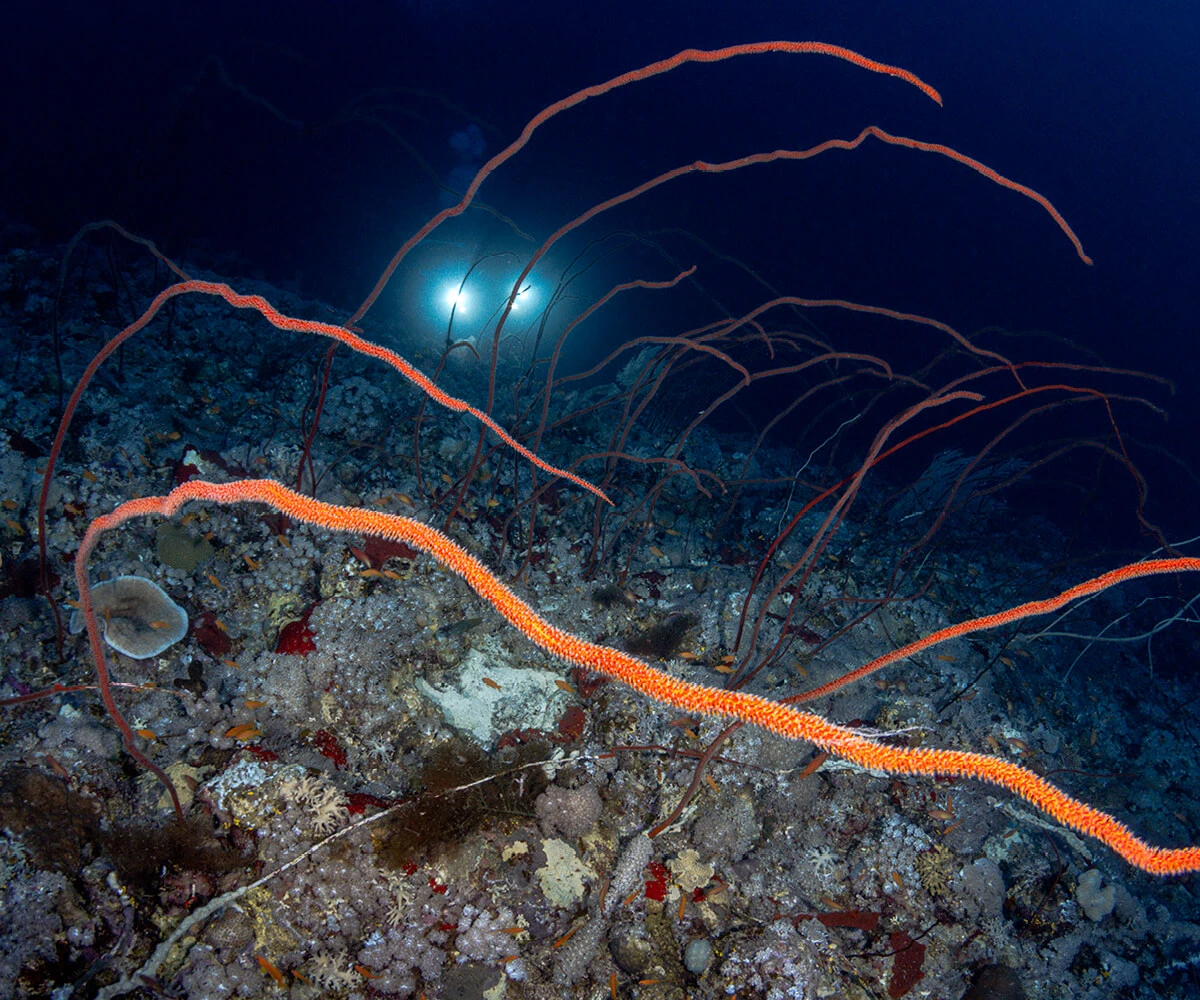
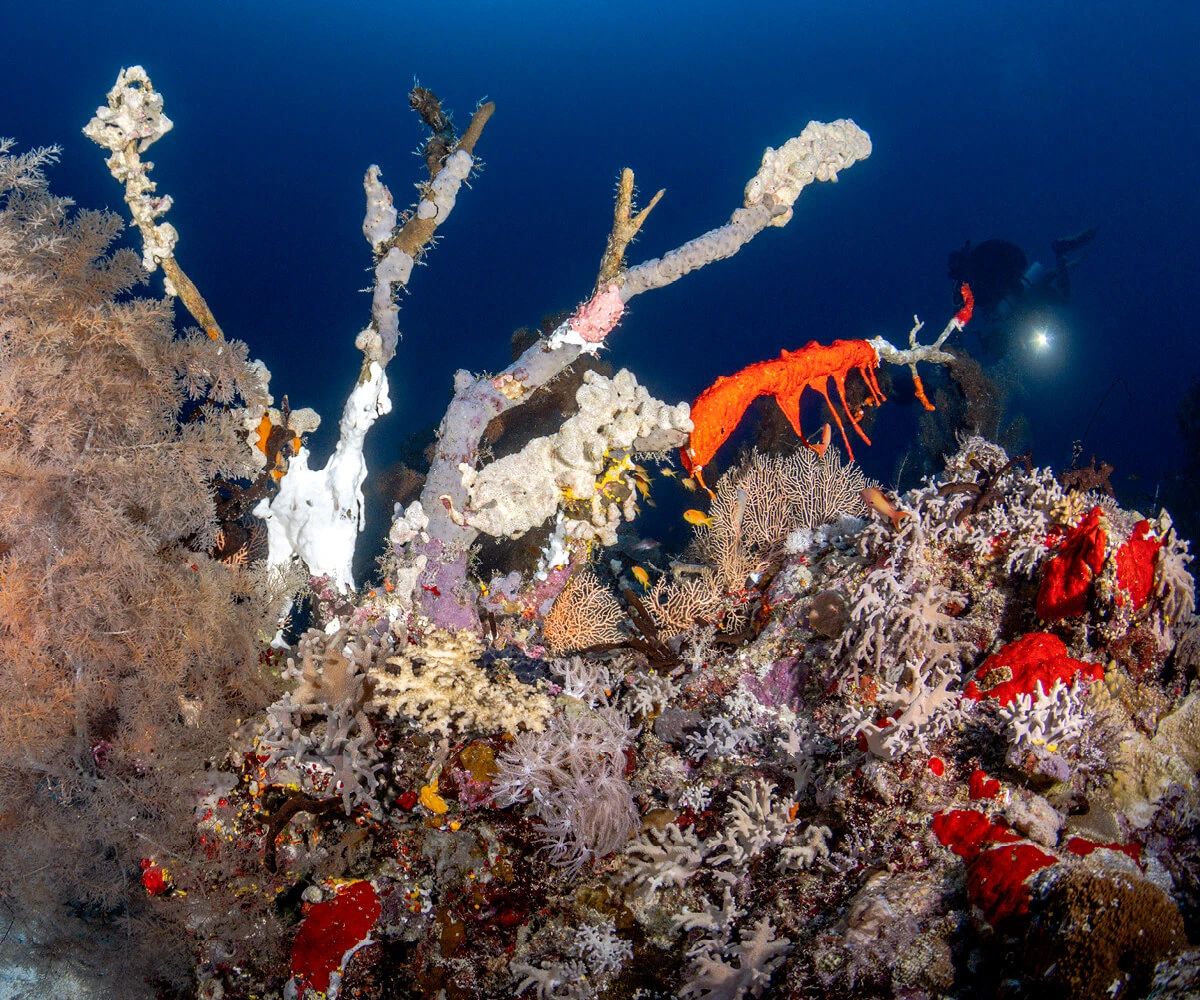
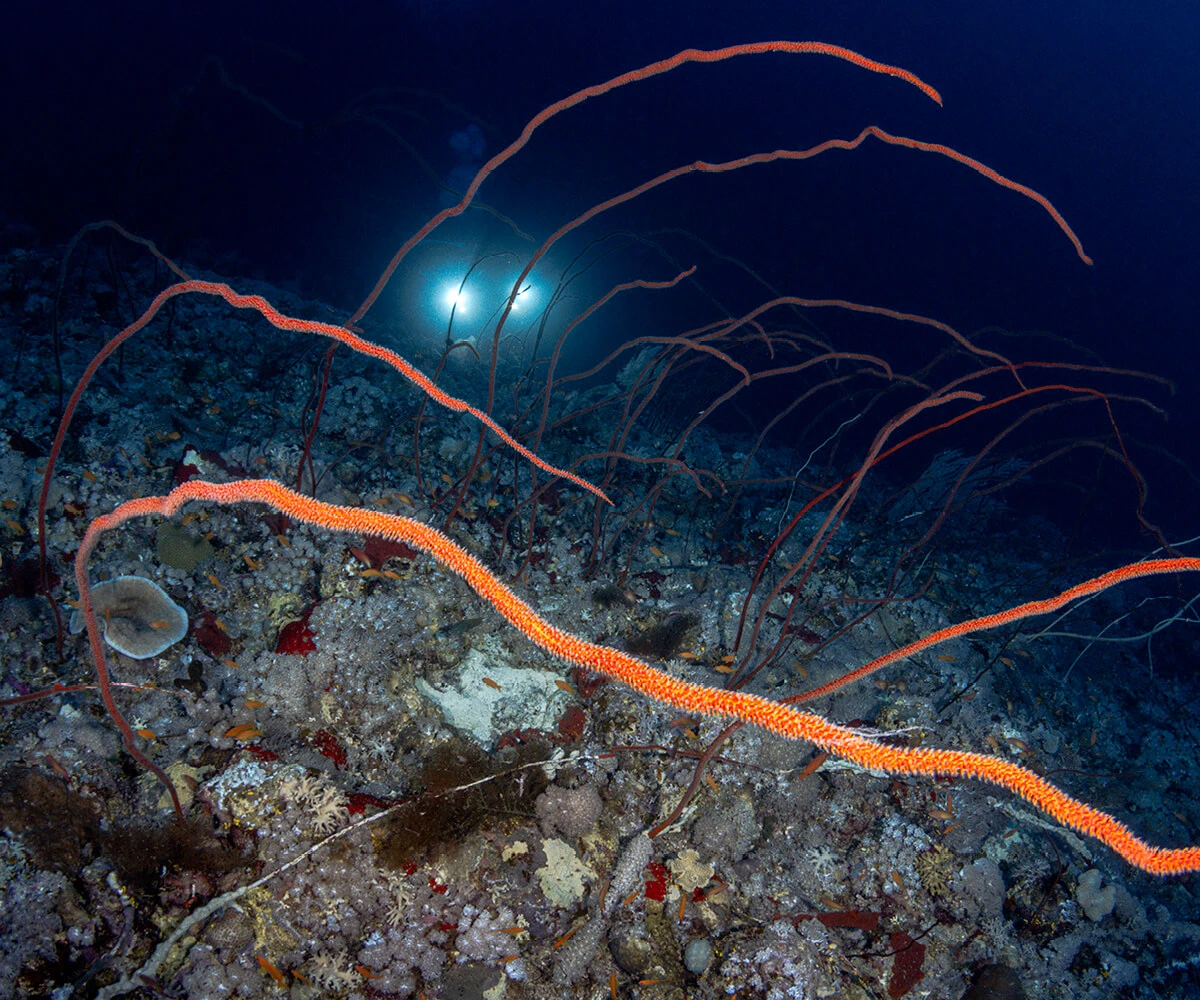
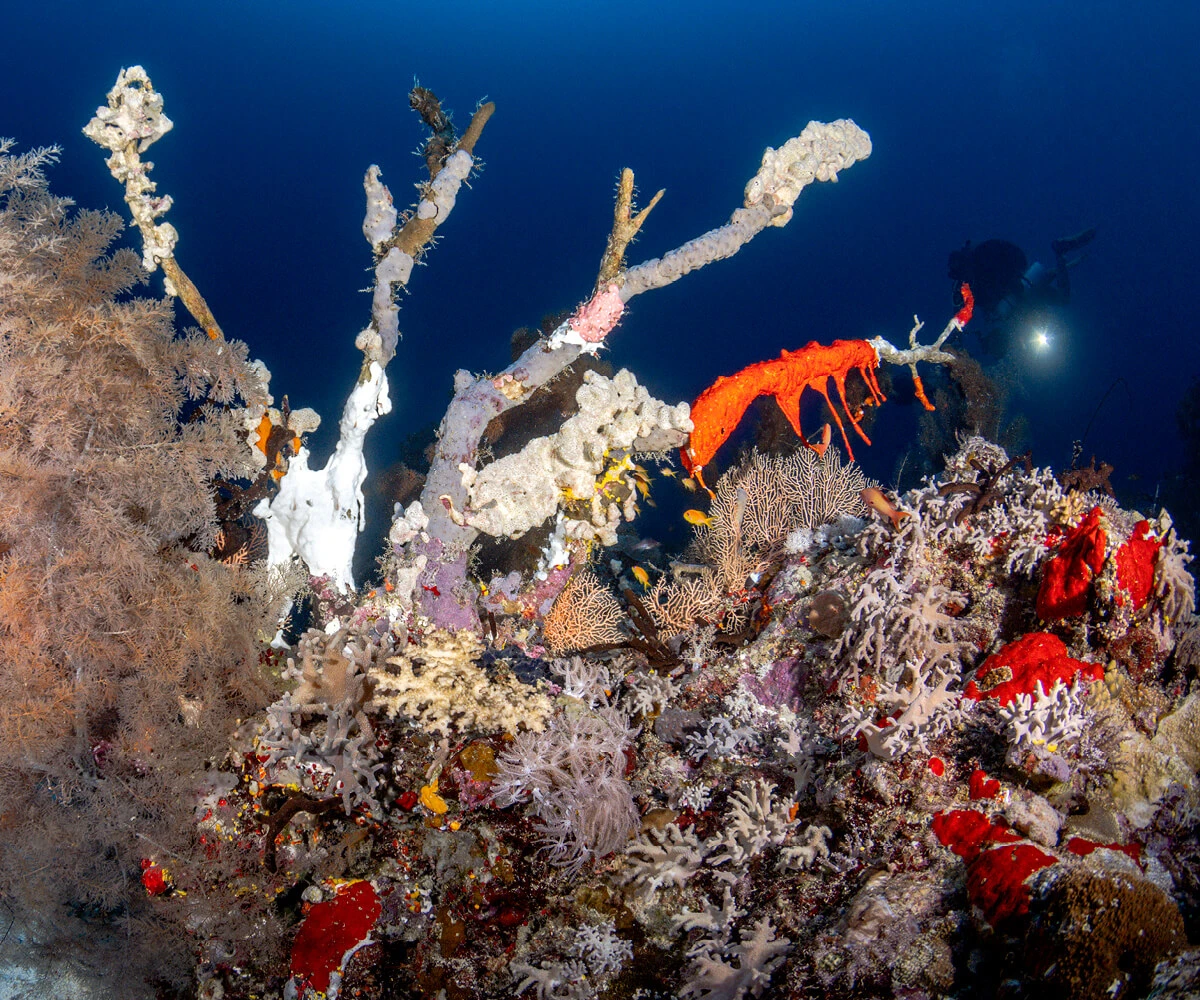
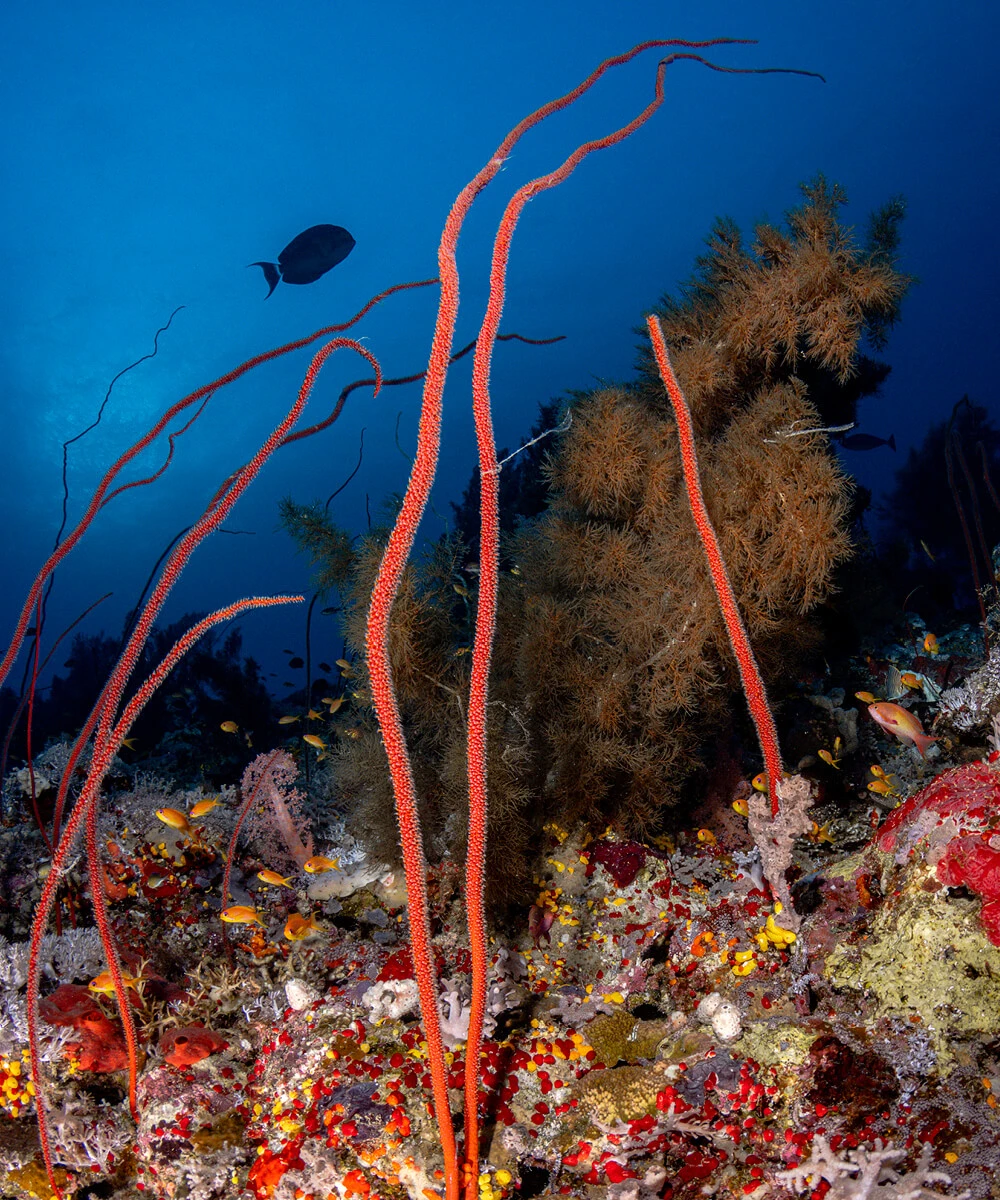
The challenging conditions have a huge payoff; swimming across the reef, underwater explorers will be treated to visions of brightly-coloured coral and underwater ‘trees’ that are decorated in vibrant sponges, almost resembling paint. Bushes of black coral are dotted across the sandy floor, and the singular strands of red Juncella rubra make for some interesting photographs. As with all corals, sea whips are susceptible to increasing sea temperatures and ocean acidification caused by climate change. So, be careful around the coral you encounter – they may be older than you think! Scientists believe that deep sea corals may be one of the oldest living marine organisms on the planet, with some species estimated to be over 4,000 years old.
Silky sharks are also known to frequent the reef. Named after the smooth silky texture of their skin, they are known to have acute hearing which they use to their advantage when seeking out and capturing their prey.
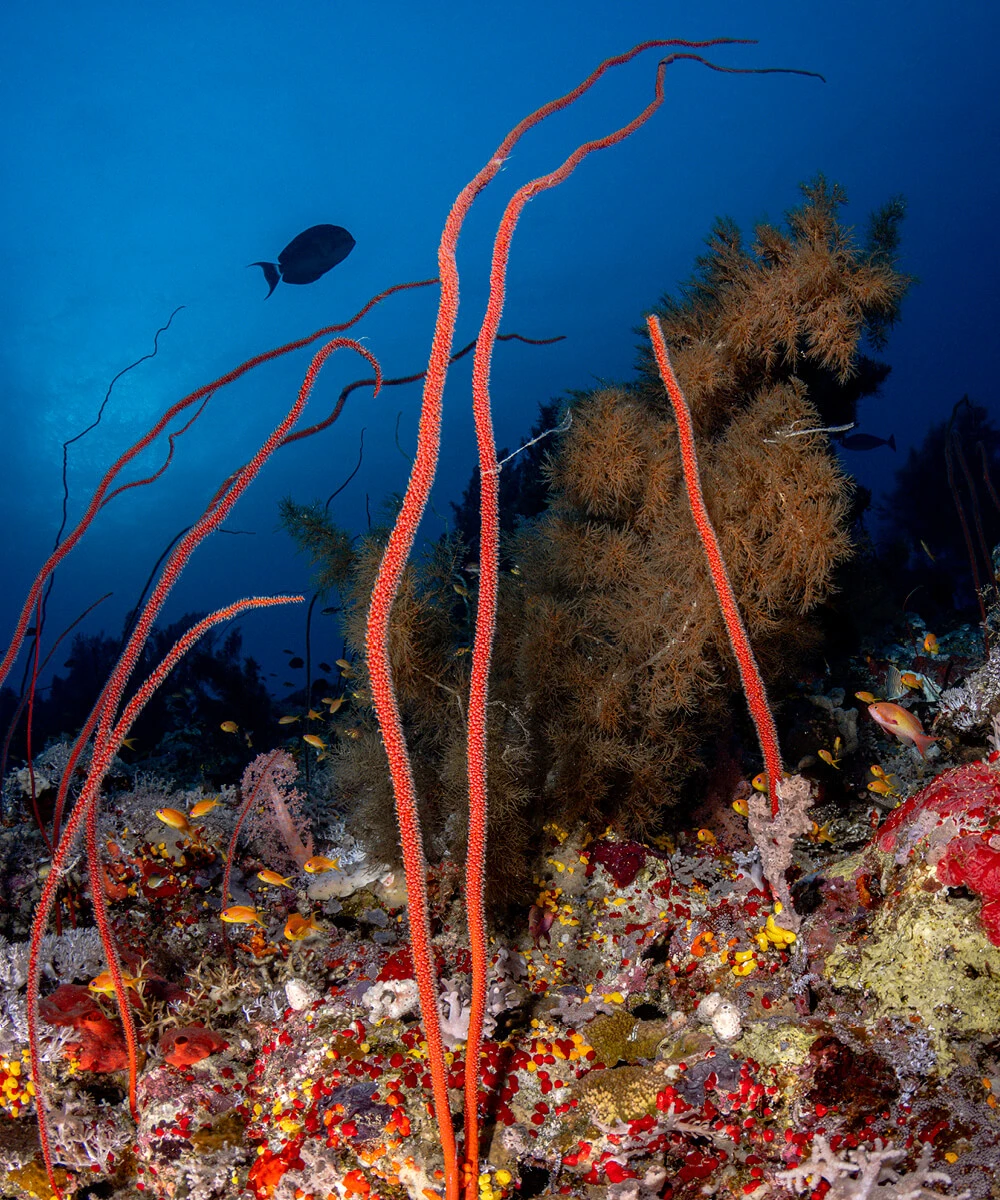
With all this and more to see, Takshif Albraniah reef is an underwater paintbox begging to be explored.