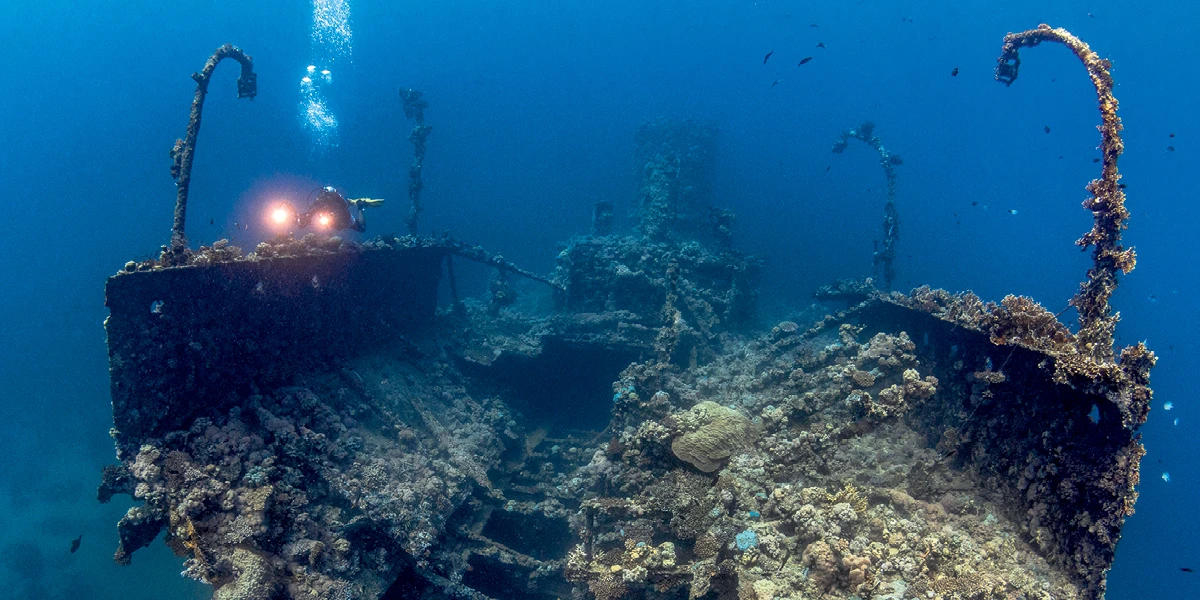
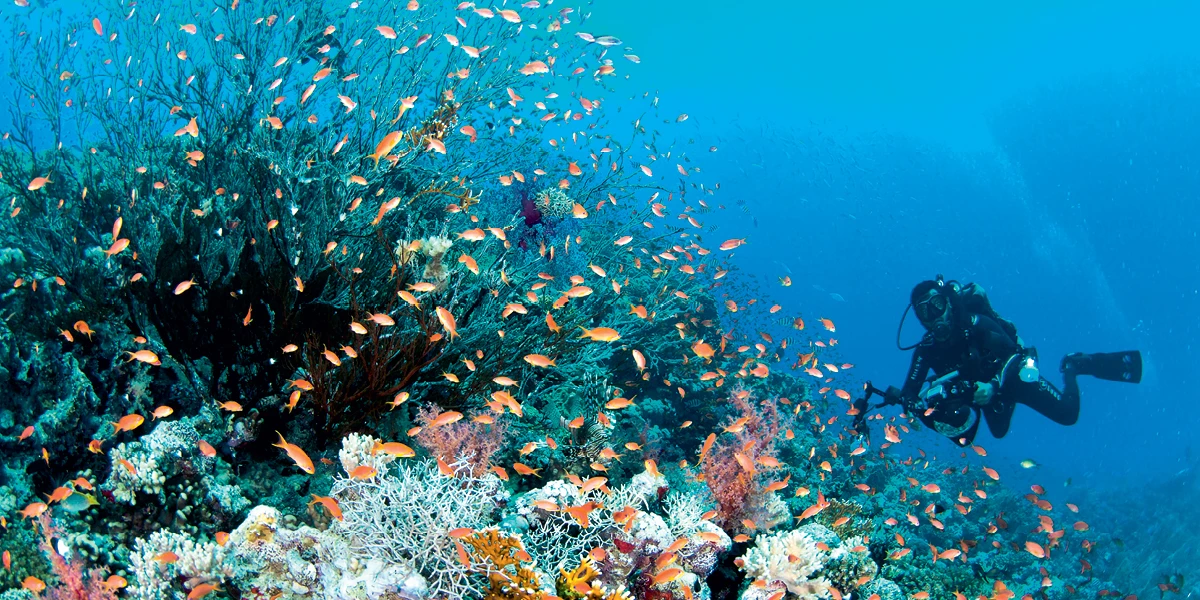
The Red Sea has a rich, intriguing history that can be traced back many thousands of years. One of the first large bodies of water mentioned in recorded history, the Red Sea, or Al-Bahr Al-Ahmar in Arabic, has served as an important geographical body of water for trade and transport. Findings of Roman shipwrecks discovered off the coast, monumental cities chiselled into the rockface and discarded shells and stone tools are reshaping what we know of early human migration. An avenue of maritime trade for millennia, even today newly discovered treasures are helping archaeologists piece together its storied past, weaving a fascinating narrative of ancient Arabian civilisations, pilgrims and incense traders.
One such early civilisation is that of the Nabataeans, known as builders of the ancient cities Petra and Hegra, who were exceptionally skilled merchants. For centuries, the Nabataeans controlled the prosperous desert trade in the region, providing safe passage to camel caravans laden with precious incense and spices. The Nabataeans were also seafarers; though evidence is eroded by time, historians believe their fabled Red Sea port of Leuke Kome was situated somewhere between Al-Wajh and Yanbu.
Full of bountiful resources, historic and modern civilisations have grown and prospered from the Red Sea. Despite navigational challenges such as few natural harbours, sandstorms and highly irregular water currents, the Red Sea has been utilised for over 4,000 years. Integral to early Egyptian commerce (2,000 BCE) and used as a water route to India by 1,000 BCE, the Red Sea has been a well chartered body of water for quite some time.
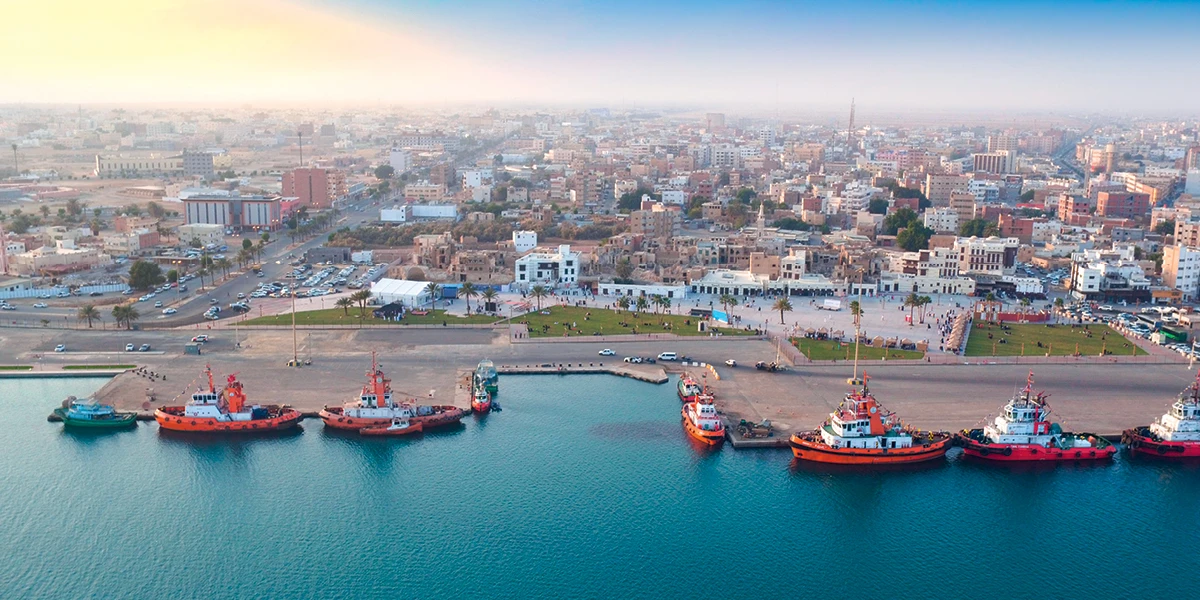
By the Silk Road era, the Red Sea was a nexus for maritime trade. The historic, coastal city of Jeddah welcomed merchants and spice traders from all around the world to its traditional souks and khans. As well as a flourishing history of trade, Jeddah’s coral-built old town was the gateway to Makkah, chosen by the Caliph ‘Uthman ibn ‘Affan in 646 AD as a pilgrim port. Over the centuries, multiple millions of pilgrims have crossed the Red Sea while journeying to Makkah and Al Madinah, the two holiest sites in Islam.
Full of mineral resources, deposits of petroleum, evaporite, sulphur, phosphates and heavy metals are found within the depths of the Red Sea. The Atlantis II Deep basin offers significant value due to deposits of iron, zinc and copper, among other trace quantities. However, due to challenges in extraction, many of these resources have not been exploited.
A rare occurrence not yet fully understood, the formation of volcanic islands has transpired in the Red Sea as recently as 2013. The islands grow quickly but shrink in size just as fast. This is due to erosion from the wind and ocean currents. Known as a submarine eruption, these islands are formed from undersea seismic activity. The emergence of these islands suggests the presence of a magmatically active zone, which is when hot molten or semi-molten natural material is active to form lava and other igneous rock.
Linking multiple bodies of water, the Red Sea extends to the Gulfs of Suez and Aqaba to the north and connects with the Gulf of Aden, leading to the Arabian Sea towards the south. In the late 1800s, the Suez Canal was constructed to enhance trade routes by connecting the Red Sea with the Mediterranean Sea located further north. Today, the Red Sea continues to be an exceptional resource for the countries it borders and is an integral part of the world’s global supply chain.
Fast facts