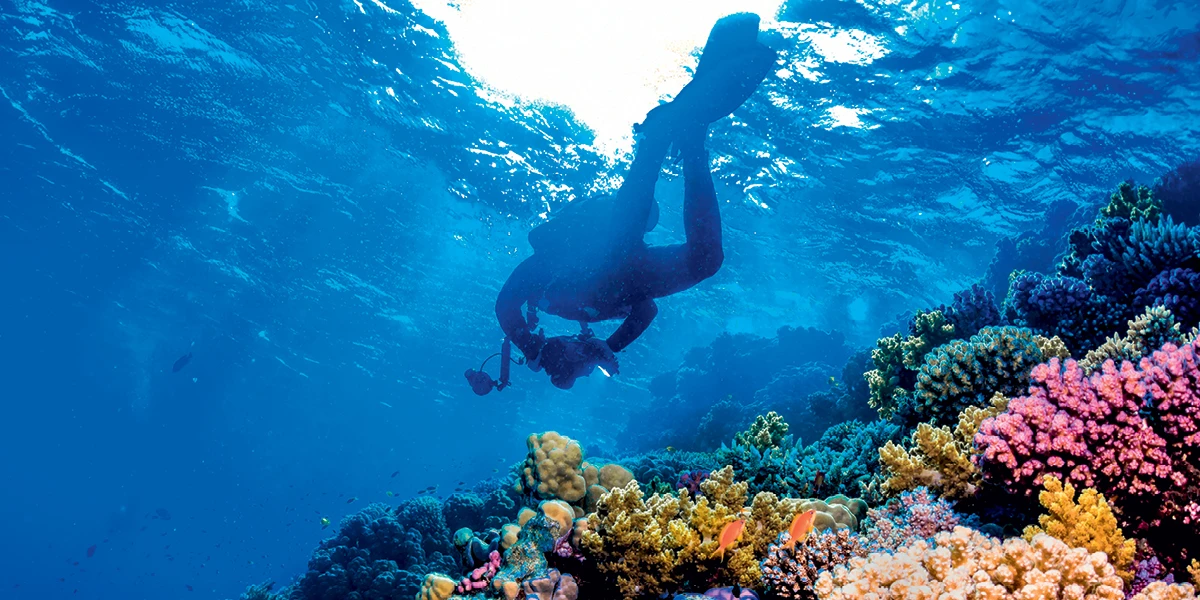
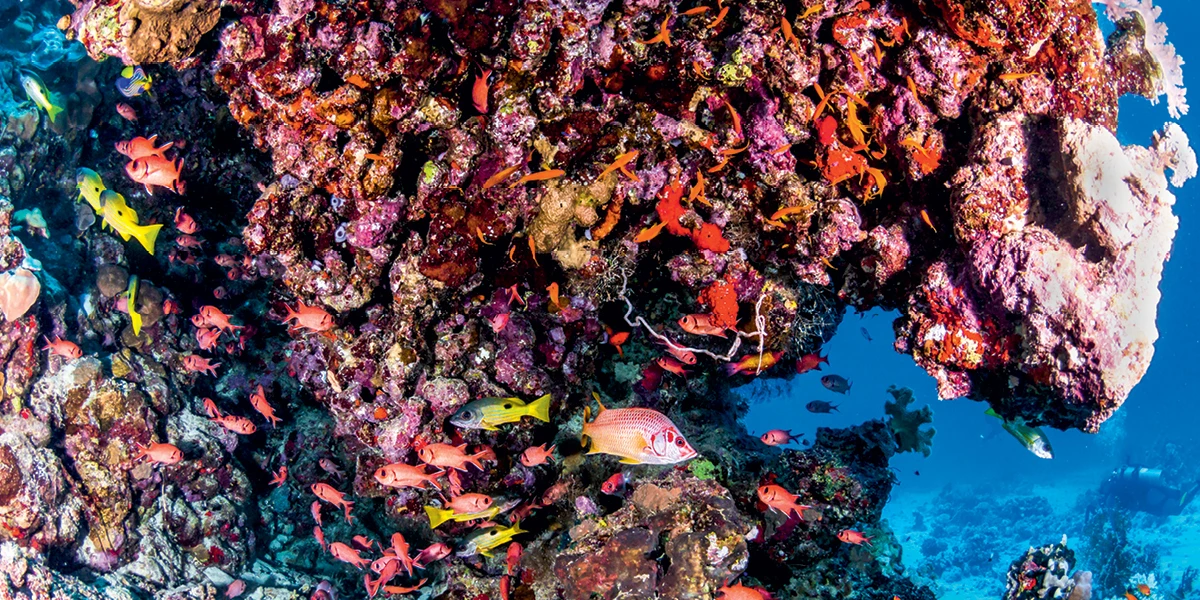
With crystalline blue waters and pristine coral reefs, Saudi Arabia’s Red Sea is the final frontier in diving. It’s an unspoilt wilderness that stretches some 1,760km from the Kingdom’s southern border to the Gulf of Aqaba in the north – offering the potential for unparalleled discovery. Saudi Arabia might have 79 per cent of the Red Sea shoreline but most of its reefs and coastline remain largely unexplored. For divers, it’s a rare opportunity to experience Earth’s last real paradise. Nature in its purest form – isolated and untouched.
The Red Sea is one of the richest and most productive marine ecosystems in the world. With some of the world’s warmest and saltiest waters, the Red Sea is able to sustain the unique biodiversity which grows and lives within its waters. Its vast coral reefs are some of the best-preserved on the planet and full of life, with over 1,200 kinds of fish – 10 per cent of which are unique to the Red Sea – and some of the world’s rarest species, from the hawksbill turtle to the elusive whale shark.
Thanks in part to its splendid isolation, healthy corals are evident at any dive site – home to the type of reefs every diver dreams of: pristine, colourful, intact and supporting wildly abundant marine species, from the tiniest critters to the largest predators. Fortunately, the large number of endemic coral species, many of which have developed an unusually high tolerance to climate change, have largely avoided the extreme bleaching that has afflicted reefs in virtually every other part of the world. For the northern Red Sea, in particular, the reefs are as pure as it gets.
Mantas, Napoleon wrasse and dugongs, hammerhead, whitetip and blacktip sharks – the volume and variety of marine life in the Red Sea, coupled with stunning crystal-clear water and fringing reefs in the shallows, makes for world-class diving and snorkelling. There is also a variety of endemic species such as the Arabian surgeonfish, Najil (or roving grouper) and the Koran angelfish, which can be found in the waters of the Red Sea. The next few pages are by no means an exhaustive list – simply a glimpse into some of the marvellous species found in these waters.
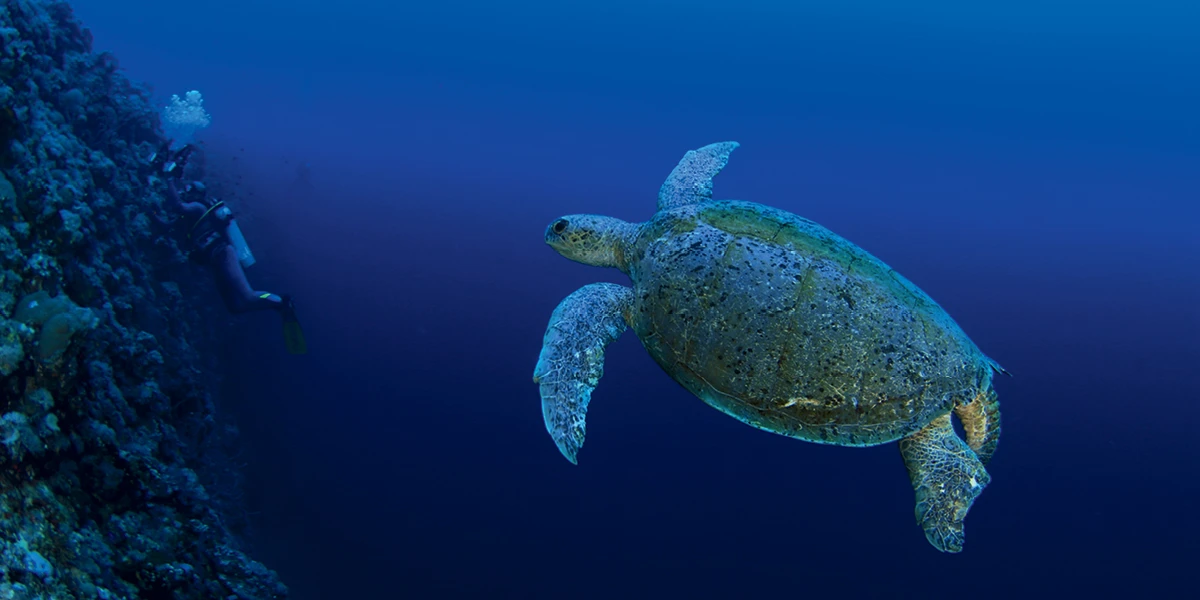
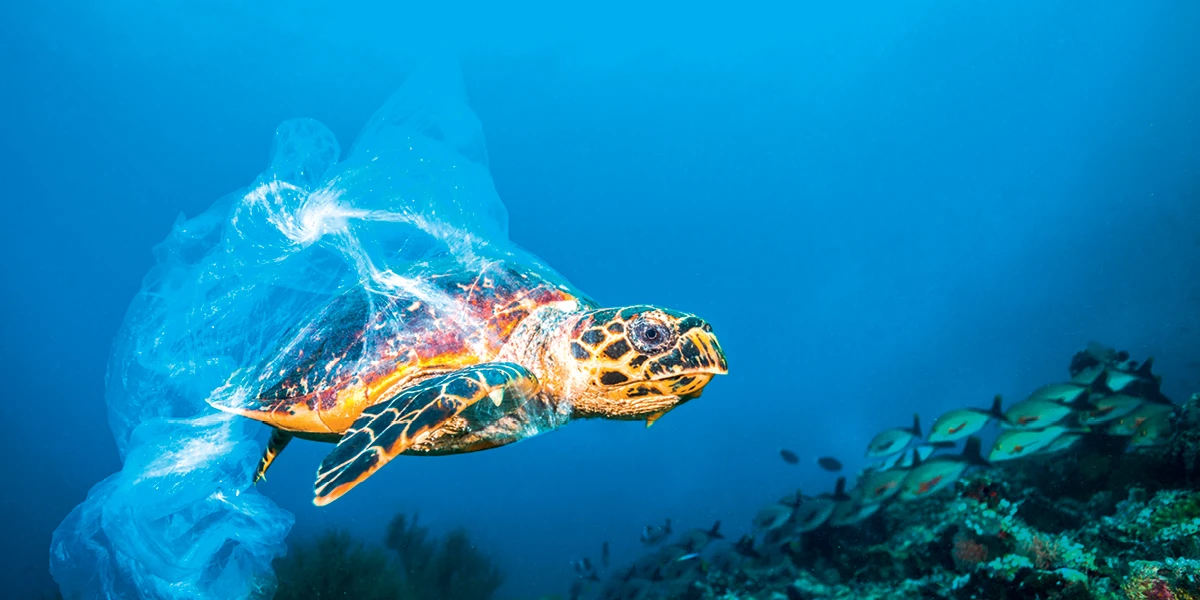
Scientists currently recognise seven living species of sea turtles worldwide, five of which can be found in the Red Sea: the green turtle, the hawksbill turtle, the leatherback turtle, the loggerhead turtle and the olive-ridley turtle. With numerous islands along the Kingdom’s coast, turtles can often be found nesting along these white, sandy beaches. Due to minimal threat from natural predators destroying nests, turtle populations have been able to flourish in the area.
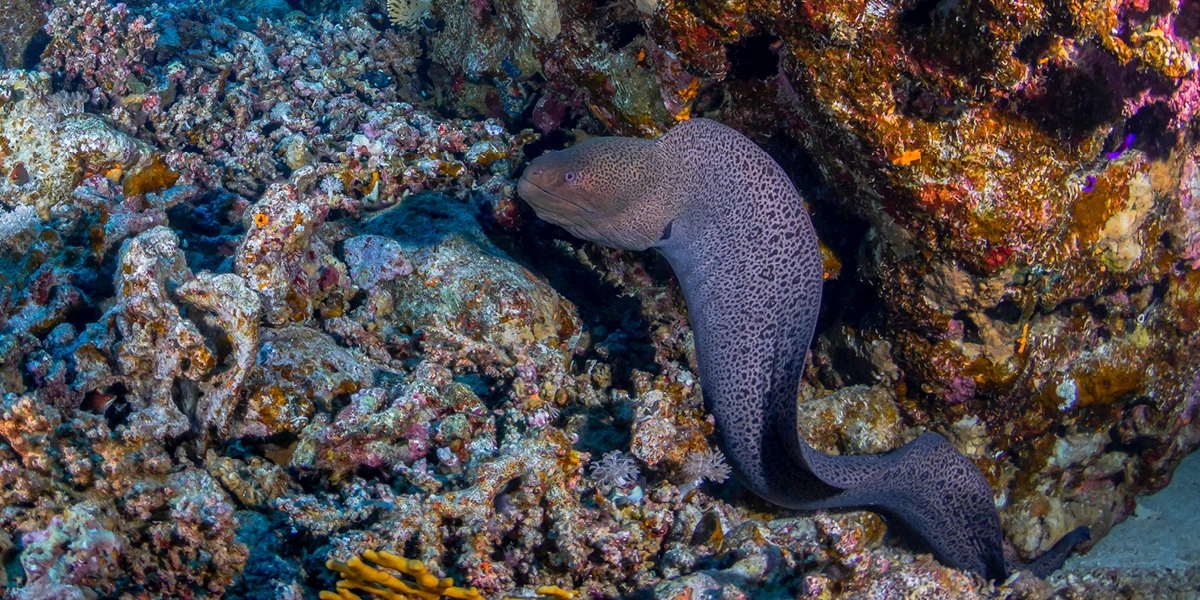
With over 200 species of moray eel, these serpentine fish are often found hiding between the crevices of coral and rock. Lacking scales and prone to poor eyesight, moray eels secrete a protective mucus that can be poisonous in some species. These lonesome creatures have a second set of razor-sharp teeth that help them capture prey, even on land.
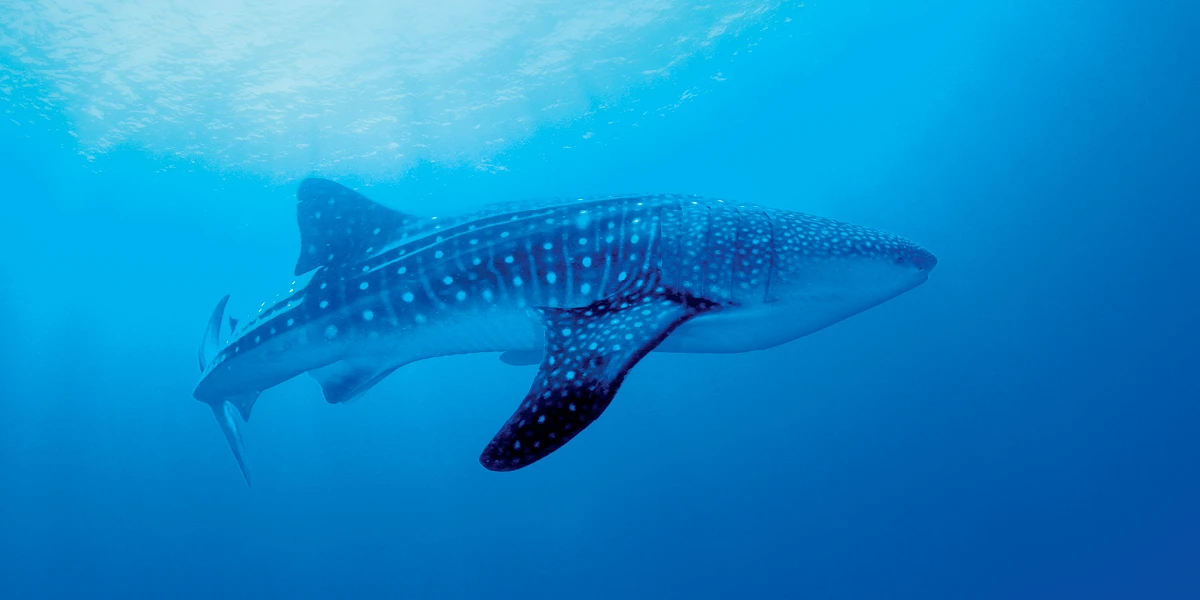
In recent years, juvenile whale sharks have been discovered gathering at a coral reef just 4km off the coast of Saudi Arabia between February and May. These gentle giants are the largest fish in the world. They feed by opening their mouths to filter the water for tiny fish and floating organisms called zooplankton.
Fast facts
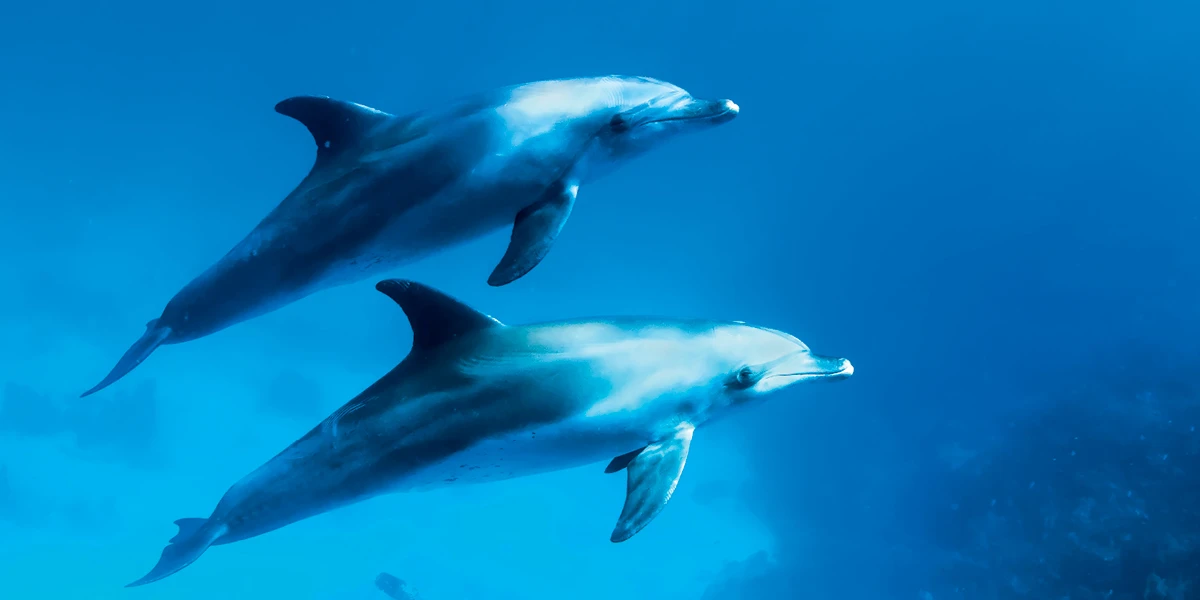
The Red Sea is home to 16 species of dolphin, with eight commonly observed including the common bottlenose, spinner dolphin, Indopacific bottlenose, pantropical spotted, longbeaked common, Risso’s whale, humpback whale and Bryde’s whale. With a permanent smile due to their curved mouths, these friendly mammals are often spotted from boats as they must frequently rise to the surface for air.
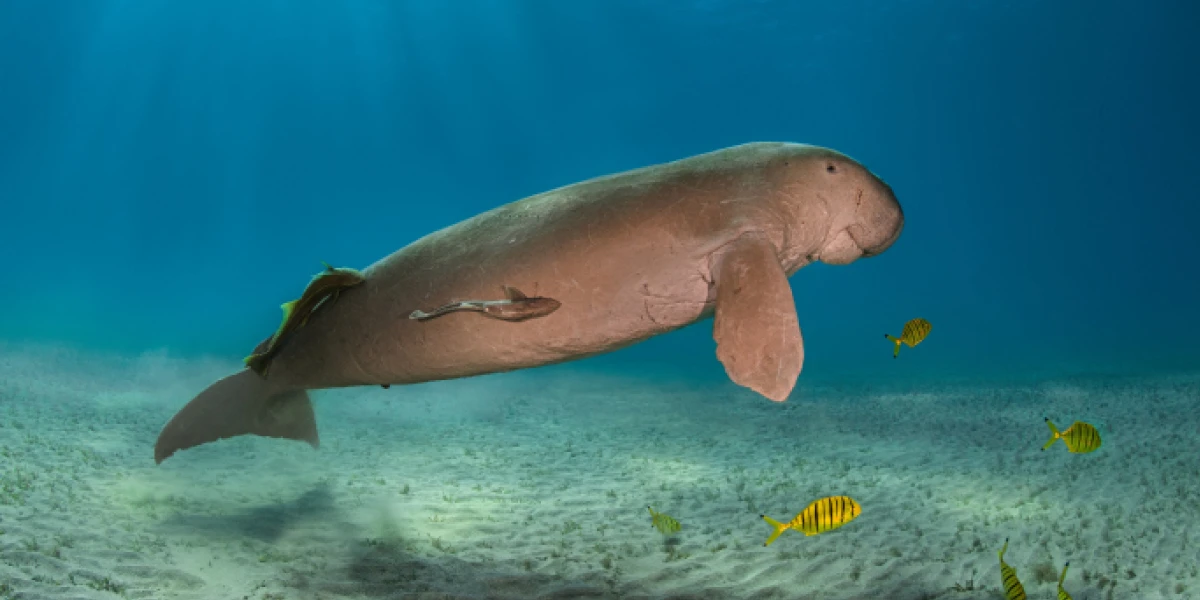
The dugong is a large aquatic mammal considered the inspiration for ancient tales of mermaids and sirens. These peaceful, languid creatures graze on seagrass in shallow waters. Due to their leisurely movements, they are an unfortunate target for hunters even though they are now protected animals. Sure to bring a smile, dugongs have been observed “standing” on their tail with their heads above water so they can easily breathe.
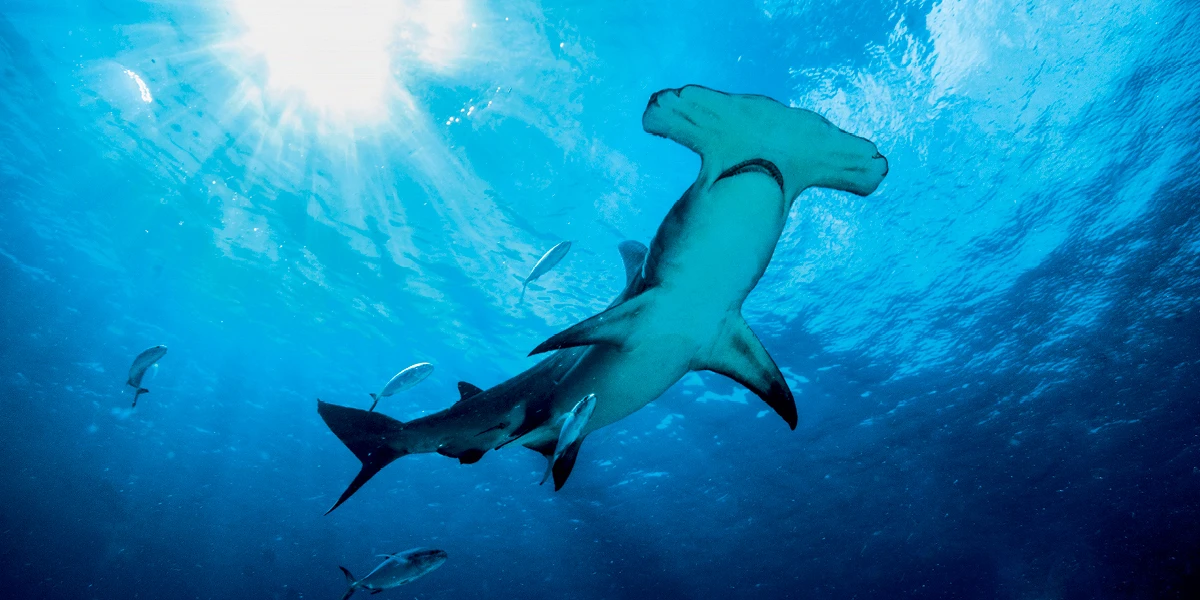
The distinctive head shape of hammerhead sharks is an anatomical feature that enhances its ability to capture prey. With wide-set eyes, hammerheads have an enhanced ability to thoroughly scan the ocean floor. Its extra wide head helps pin stingrays to the seabed for an easy meal. Typically not a threat, there is potential for humans to encounter danger when face-to-face with this animal.
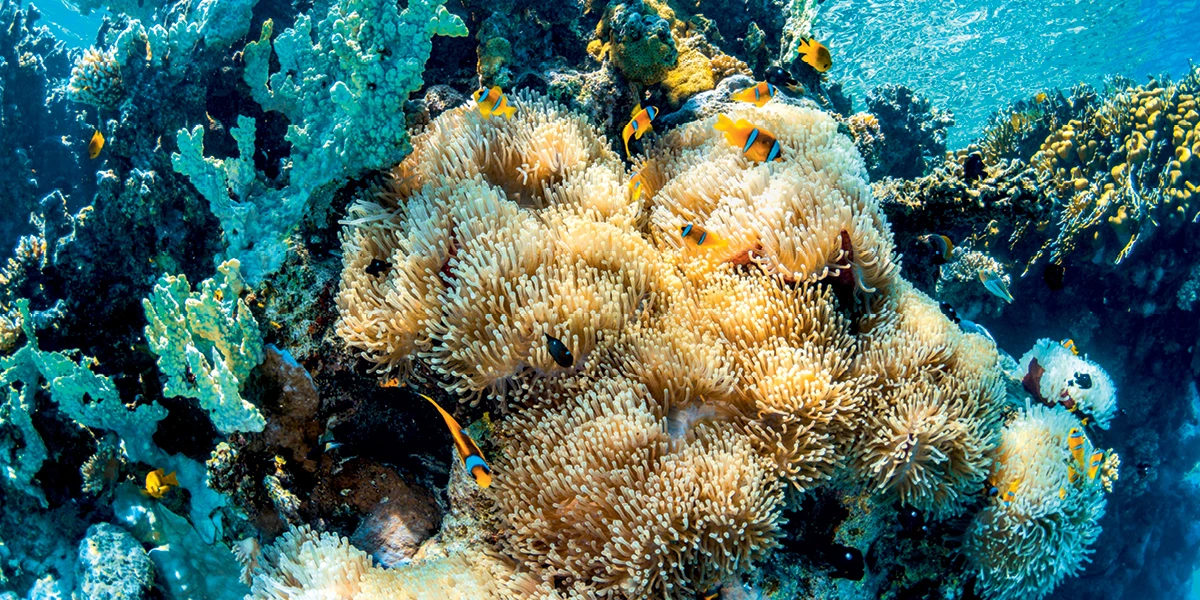
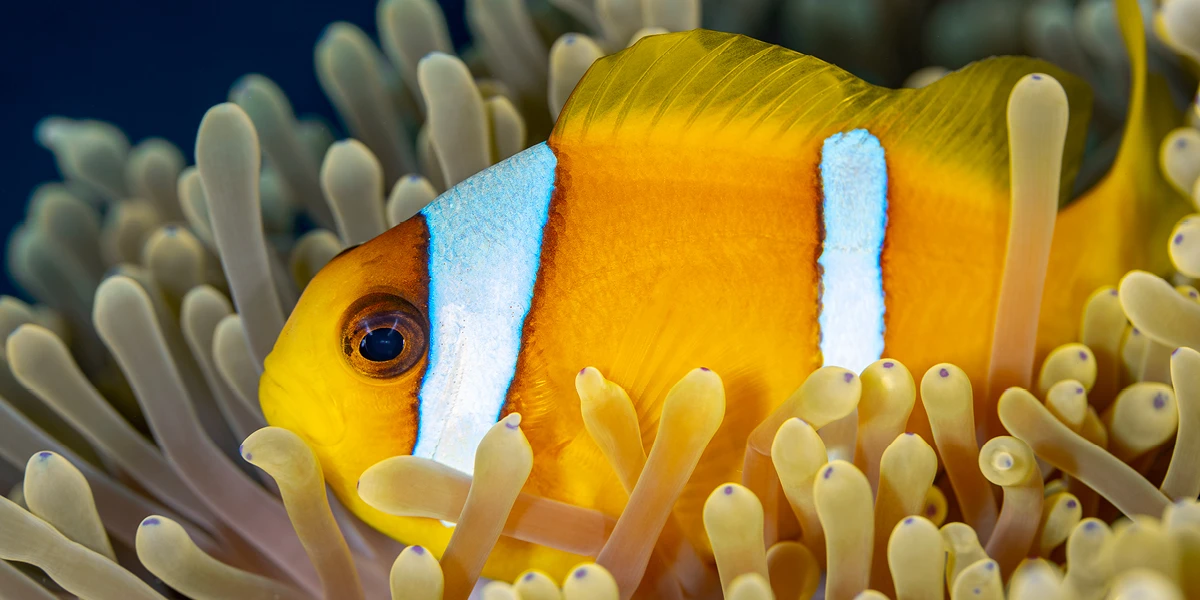
A common resident of coral reefs, several species of this famous fish live among the tentacles of sea anemone. While the anemone’s sting kills other fish, the clownfish is covered in a layer of mucus protecting it from an untimely demise. With over 30 species, these reef-dwellers ranges in size from 10cm to 12cm and can live up to 10 years in the wild. Interestingly, clownfish are all born male and can irreversibly switch to female.
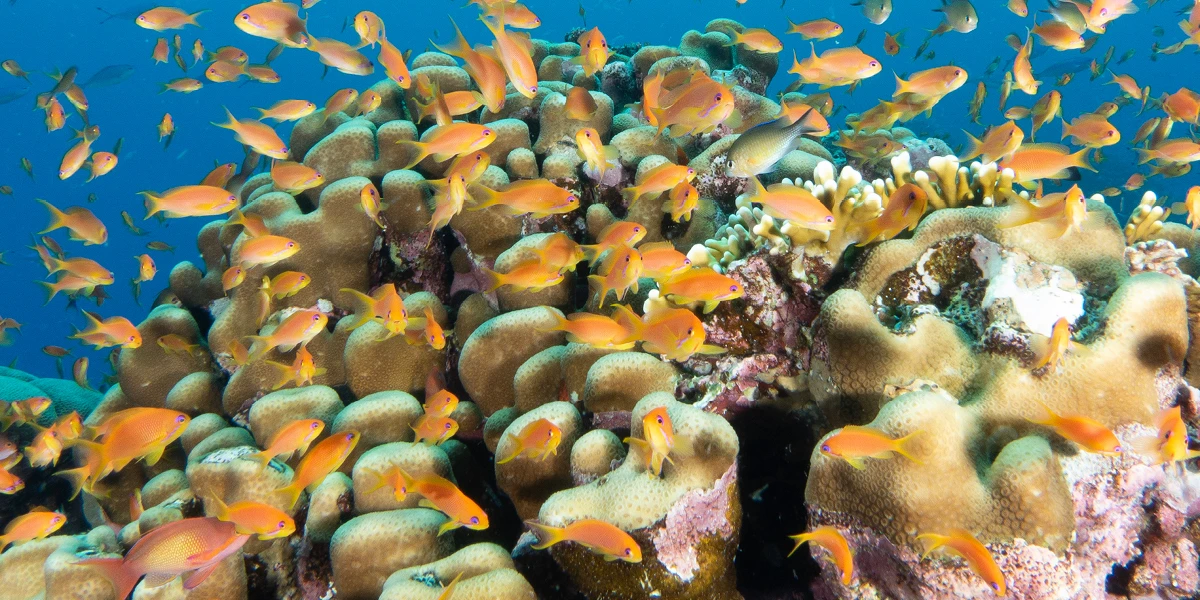
The small but mighty anthias, typically a bright orange-red colour, is a common sight among reef slopes in the Red Sea. They are also a popular pet for saltwater aquariums. Anthias prefer the company of their peers and are generally found swimming in shoals. Anthias are born female but can change their sex into male if necessary. Unlike clownfish, they can switch their sex back to female.
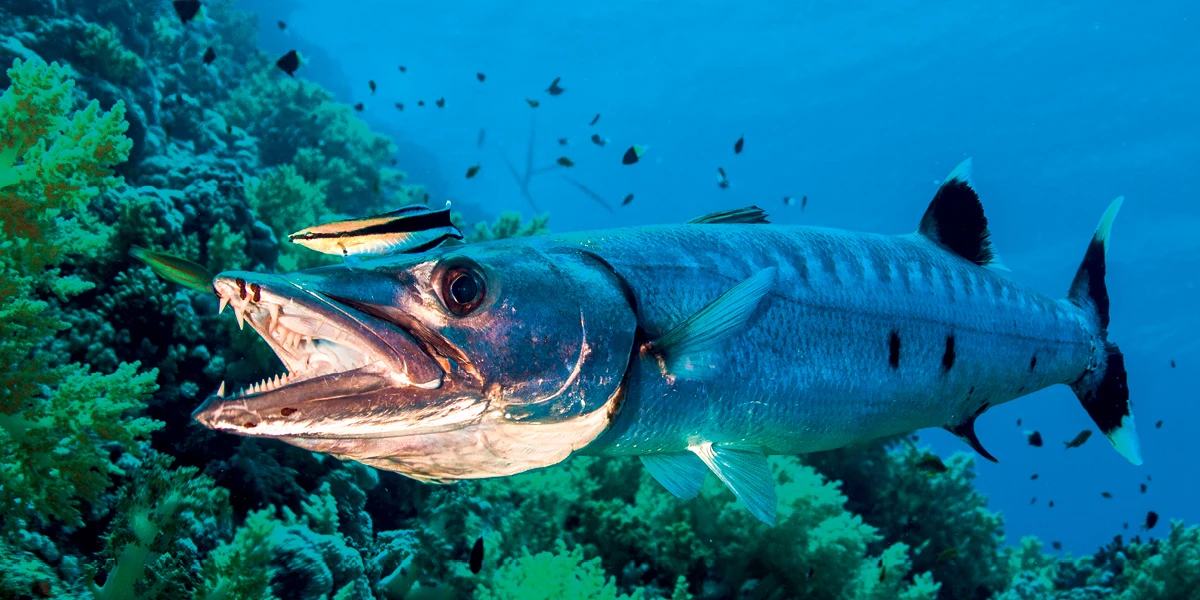
One of the fastest fish in the sea, barracudas have an estimated top speed of 58km/h. Characterised by a distinct silver shine and long narrow body, it’s no wonder these creatures are referred to as a battery when swimming in groups. With two sets of teeth, barracuda are able to pierce and tear their prey apart.