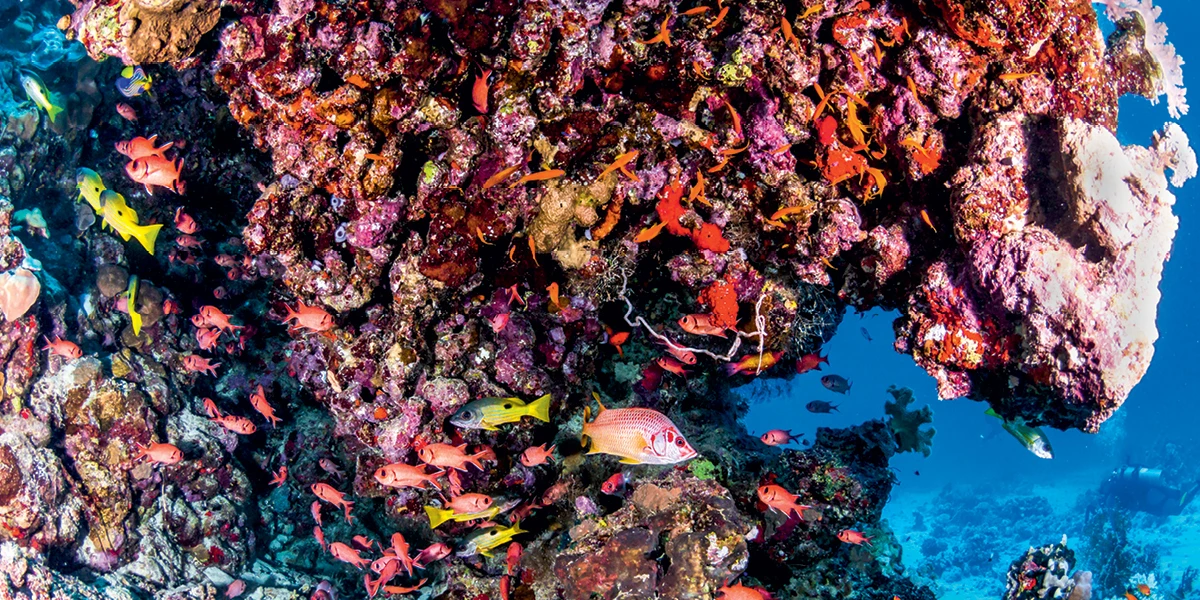
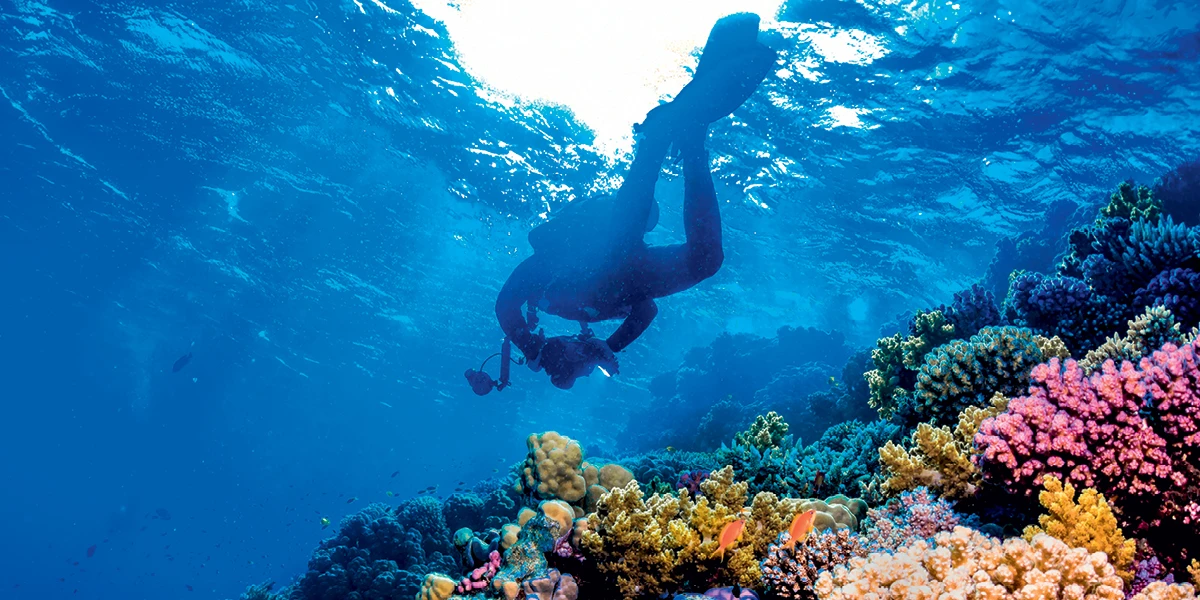
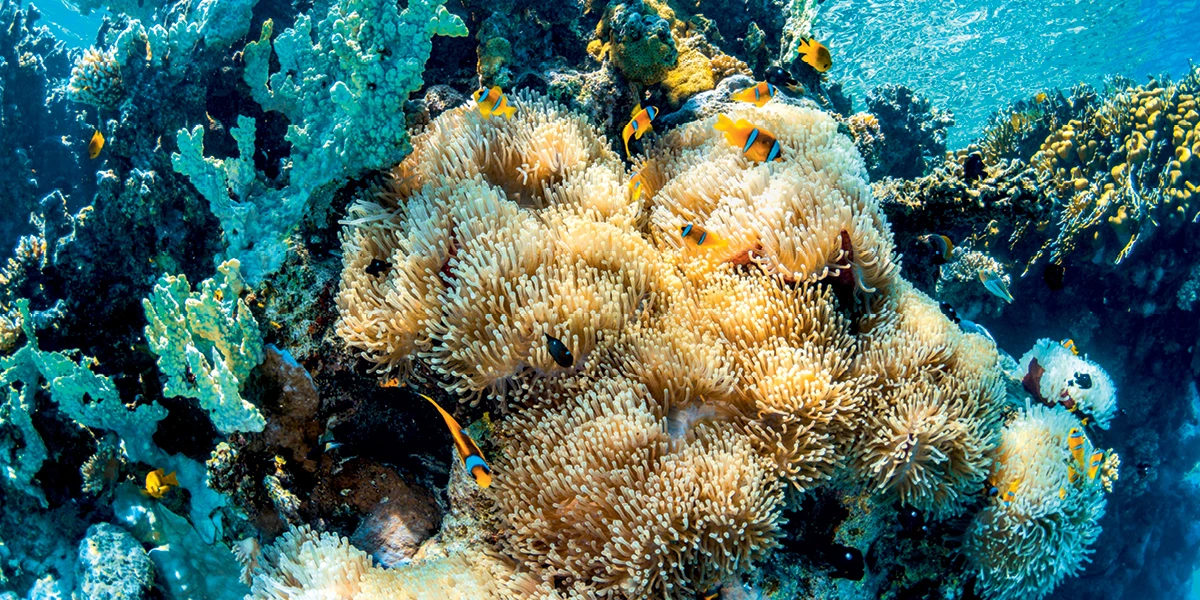
The complex reef system in the Red Sea boasts fringing reefs with patch and deeper reef formations, as well as barrier reefs composed of platform and “ribbon” reef structures. With remarkably healthy coral in the waters along Saudi Arabia’s coastline, divers can have an experience that is becoming progressively difficult in other parts of the world. Woefully, as seas grow increasingly warmer, reefs around the world are being decimated by mass bleaching, which occurs when stressed corals expel microscopic algae – known as zooxanthellae – which gives them colour. In a much-needed glimmer of hope, scientists have discovered that Red Sea corals are unusually resilient against rising water temperatures. Research suggests the coral has undergone evolutionary adaptation, growing more resistant to heat over time. Remarkably, this resilience is then passed down to their offspring, creating future generations of coral species that are immune to bleaching.
With the bleak prediction that up to 90 per cent of coral reefs may die by 2050, the Red Sea’s tough, heat-loving coral may be a lifeline for dying reefs around the world. Research is in its early days, but the hope is that the Red Sea’s corals could aid with restoration, enabling scientists to help vulnerable coral reefs build resistance through assisted evolution.
With the Red Sea mere footsteps from its labs, the Red Sea Research Center at King Abdullah University of Science and Technology (KAUST) in Thuwal undertakes a wide variety of vital research, deepening our understanding of the ocean’s rich ecology. Its research includes tagging fish to aid in the design of Marine Protected Areas (MPAs), monitoring a local population of whale sharks and assessing the impact of climate change on coral. The distinguished team includes Professor Carlos Duarte, a world leader in marine ecology and biological oceanography whose decade-long research into “blue carbon” – the carbon captured and stored by mangroves, tidal marshes and seagrass – was adopted by the United Nations Framework Convention on Climate Change and is considered a fundamental contribution to mitigate the effects of global warming. The centre also works closely with Red Sea Global to achieve a 30 per cent conservation outcome.
Schools of anthias are a common sight throughout the Red Sea. Bright in colour, these fish provide a beautiful contrast amongst the various coral.